All-Season vs. All-Terrain Tires: Which Is Right for Your Rig?
All-season and all-terrain tires are not the same thing. Understanding the difference could save you from being stranded — or from throwing money away on tires you don't need.
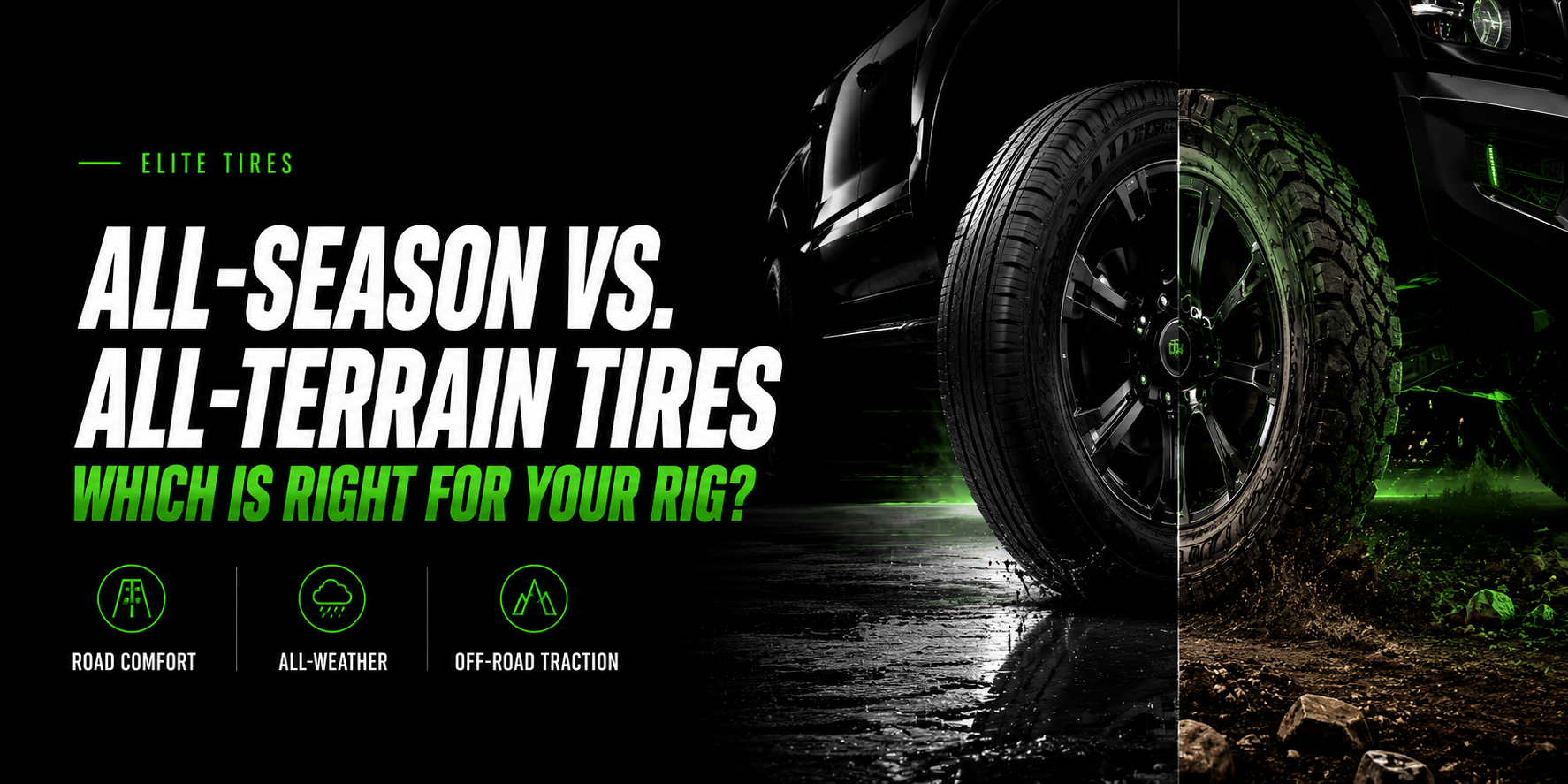
Walk into any tire shop and you'll hear "all-season" thrown around like it means everything. It doesn't. If you drive a truck, SUV, or anything that occasionally leaves the pavement, understanding the real difference between all-season and all-terrain rubber is worth your time.
What All-Season Tires Actually Mean
All-season tires are designed for paved roads in a wide range of weather conditions — light rain, light snow, varying temperatures. They're a compromise: not as grippy as dedicated summer tires in the heat, not as capable as winter tires in the snow, but decent across the board. The tread patterns are relatively shallow and symmetrical, optimized for low road noise and long tread life on asphalt.
If you commute on highways and occasionally drive on wet roads, all-season is probably all you need. But "all-season" does not mean "all-terrain." Mud, loose gravel, and deep snow will expose their limits quickly.
What All-Terrain Tires Offer
All-terrain (AT) tires have an aggressive, open tread pattern with larger void areas between tread blocks. This allows dirt, gravel, and mud to be ejected as the tire rotates — maintaining contact and grip on loose surfaces. The sidewalls are typically reinforced for better puncture resistance on rocky trails.
The tradeoffs: AT tires are louder on highways, slightly reduce fuel economy, and may wear faster on purely paved use compared to all-seasons. But for drivers who spend time on dirt roads, forest tracks, or towing over uneven terrain, the capability gain is significant.
What About Mud-Terrain Tires?
Mud-terrain (MT) tires take the concept further — massive tread lugs, deep voids, aggressive self-cleaning. They're purpose-built for deep mud, rock crawling, and extreme off-road. On the highway they're noticeably loud and less comfortable. Unless you're doing serious wheeling, an AT is a better daily compromise.
The 3-Peak Mountain Snowflake Rating
Look for the 3PMSF symbol (three-peak mountain with a snowflake) if winter driving matters to you. All-seasons often lack this. Many all-terrain tires carry it. This rating means the tire has passed standardized performance requirements in severe snow conditions — it's a meaningful indicator, not marketing.
Making the Decision
Stick with all-season if: You drive mostly on paved roads, live in a mild climate, and prioritize fuel efficiency and quiet ride.
Go all-terrain if: You drive on dirt or gravel roads regularly, tow or haul heavy loads over uneven terrain, camp or recreate off-road, or live somewhere with real winters.
The right tire is the one that matches how you actually use your vehicle — not how you imagine you might someday use it.