ARB Air Lockers Explained: Real Traction When the Trail Gets Serious
ARB Air Lockers can transform how a truck, Jeep, SUV, or off-road build handles rocks, mud, sand, snow, and steep terrain. Learn how locking differentials work, when they help, and why traction upgrades matter just as much as tires and suspension.
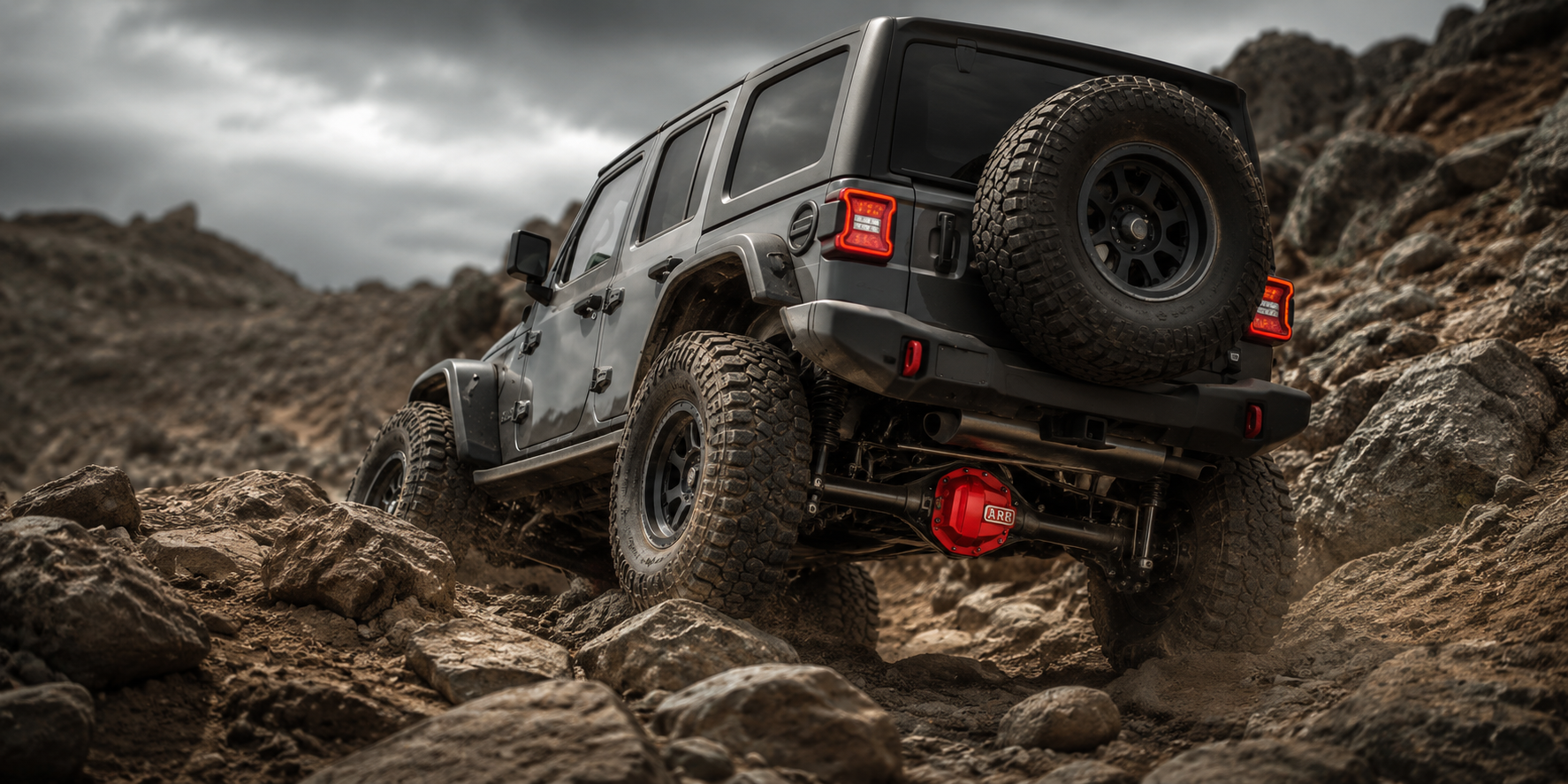
Off-road performance is not only about lift height, tire size, or how aggressive the vehicle looks. Those upgrades matter, but traction is what actually gets the vehicle through difficult terrain.
That is where ARB Air Lockers stand out.
An ARB Air Locker is a selectable locking differential designed to help both wheels on an axle turn together when maximum traction is needed. For trucks, Jeeps, SUVs, and serious trail builds, this can make a major difference in rocks, mud, sand, snow, ruts, steep climbs, and uneven terrain.
At Elite Offroad, we focus on upgrades that serve a real purpose. ARB Air Lockers fit that mindset because they are not just about making a vehicle look more capable. They help the vehicle put traction to the ground when the trail gets serious.
Why Traction Matters Off-Road
Off-roading is a traction game. It does not matter how much power the engine makes if the tires cannot transfer that power to the ground.
On flat pavement, an open differential works well for normal driving. It allows the wheels to rotate at different speeds while turning, which helps the vehicle drive smoothly on the road.
But off-road, the same open differential can become a problem. If one tire loses traction, power may go to the tire that spins instead of the tire that still has grip. That can leave the vehicle stuck even when one tire on the axle still has traction available.
A locking differential helps solve that problem.
What Is a Locking Differential?
A locking differential connects both wheels on the same axle so they rotate together. Instead of allowing one wheel to spin freely while the other does little, a locker helps send power to both wheels.
This is especially useful when one tire is in the air, one tire is on slick rock, or one side of the vehicle is in mud while the other side still has grip.
With a locker engaged, the vehicle has a better chance of continuing forward because both tires on that axle are working together.
What Makes ARB Air Lockers Different?
ARB Air Lockers are selectable lockers. That means the driver can turn them on when needed and turn them off when they are not needed.
This is a major benefit for vehicles that see both street and trail use. On the road, the differential can operate normally. Off-road, the locker can be engaged for maximum traction when the situation demands it.
That selectable control is one of the biggest reasons drivers choose ARB Air Lockers. The vehicle can stay predictable for normal driving while gaining serious traction capability for difficult terrain.
Open Differentials vs Lockers
An open differential is designed to let the left and right wheels on an axle rotate at different speeds. This is useful when turning because the outside wheel travels farther than the inside wheel.
The downside is that an open differential can send power to the wheel with the least traction. Off-road, that often means the tire that is spinning gets the power while the tire with grip does not do enough work.
A locker changes that behavior. When locked, both wheels on the axle rotate together. This gives the vehicle more traction in situations where one tire would normally spin uselessly.
Selectable Lockers vs Automatic Lockers
Not all lockers work the same way. Some lockers are automatic, while others are selectable.
An automatic locker engages based on mechanical conditions. It can provide traction without the driver manually turning it on, but it may also affect road manners depending on the vehicle and setup.
A selectable locker, like an ARB Air Locker, gives the driver control. The locker can remain off for normal driving and be activated only when extra traction is needed.
For many daily-driven off-road vehicles, that control is a major advantage.
When an ARB Air Locker Helps Most
An ARB Air Locker is most useful when traction is uneven. This happens constantly off-road.
One tire may be on rock while another is in loose dirt. One tire may be in the air during suspension articulation. One tire may be buried in mud while the other is still on solid ground.
In those moments, a locker can help keep the vehicle moving. Instead of spinning the tire with the least grip, the axle can drive both wheels together.
Rock Crawling
Rock crawling is one of the best examples of where lockers matter. When a vehicle climbs rocks, the suspension may flex and unload a tire. Sometimes a tire comes partially or completely off the ground.
With an open differential, that lifted tire may spin while the tire still on the rock does very little. With a locked differential, the tire on the ground can continue helping move the vehicle forward.
This can make the vehicle feel more controlled and capable on technical trails.
Mud and Ruts
Mud creates low-traction conditions where one tire can easily spin. Deep ruts can also lift or unload tires, making it harder for an open differential to keep the vehicle moving.
A locker can help both tires on the axle pull together, improving the chance of maintaining momentum and getting through the obstacle.
That does not mean a locker makes mud easy. Tire choice, momentum, throttle control, and recovery gear still matter. But a locker gives the vehicle a major traction advantage.
Sand and Loose Terrain
In sand and loose dirt, traction can disappear quickly. A locker can help keep both tires working together, especially when the vehicle is climbing, crossing uneven ground, or trying to maintain forward movement.
However, driver technique still matters. In sand, too much throttle can dig the vehicle down. A locker is a tool, not a replacement for smart driving.
Used correctly, it can support smoother and more controlled progress through loose terrain.
Snow and Ice
Snow and ice require careful use of traction upgrades. A locker can help in certain low-speed off-road situations, but it can also make the vehicle behave differently if used carelessly on slippery surfaces.
On icy roads, a locked axle can reduce the natural speed difference between wheels during turns, which may affect control.
This is why selectable lockers are useful. The driver can leave the locker off for normal slippery-road driving and engage it only when extra off-road traction is needed.
Front Locker vs Rear Locker
Many off-road drivers start with a rear locker because the rear axle often carries more load during climbs and can provide a major traction improvement.
A front locker can add even more capability, especially in technical terrain, but it can also affect steering when engaged. A locked front axle may make the vehicle harder to turn in some conditions.
The right setup depends on the vehicle, terrain, budget, and how serious the build needs to be. Some drivers choose a rear locker first. Others build both axles for maximum control.
Do You Need Lockers If You Already Have 4WD?
Four-wheel drive helps send power to both axles, but it does not always mean every tire is getting useful power.
With open differentials, a 4WD vehicle can still get stuck if the wrong tires lose traction. One front tire and one rear tire may spin while the other tires do very little.
Lockers help improve how that power is used. They do not replace 4WD, but they make the 4WD system more effective in difficult terrain.
ARB Air Lockers and On-Road Driving
One of the biggest advantages of a selectable locker is that it can be turned off for normal driving.
When the locker is off, the differential can behave normally for street use. That helps preserve predictable handling, smoother turning, and better road manners.
When the trail gets difficult, the locker can be engaged for traction. This makes ARB Air Lockers a strong option for vehicles that are used both on road and off road.
Air Compressor Requirements
ARB Air Lockers use air pressure to engage. That means the system requires an air compressor and proper air lines.
The compressor can often serve more than one purpose depending on the setup. In addition to operating lockers, many off-road drivers also use onboard air systems for airing up tires after trail driving.
A clean installation matters. Air lines, wiring, switches, and compressor placement should all be done carefully so the system works reliably when needed.
Professional Installation Matters
Differential work is not a casual bolt-on job. Installing a locker requires opening the differential and setting up internal components correctly.
Gear pattern, backlash, bearings, seals, and proper setup all matter. If the differential is not set up correctly, it can create noise, wear, or failure.
For most drivers, ARB Air Locker installation should be handled by an experienced professional who understands differential setup.
Lockers and Tire Choice
A locker is even more effective when paired with the right tires. All-terrain tires, mud-terrain tires, and off-road-focused tire compounds help the vehicle maintain grip in difficult conditions.
If the tires are not suited for the terrain, a locker can help, but the vehicle may still struggle.
The best off-road traction setup combines tires, tire pressure, suspension, driving technique, and differential control.
Lockers and Suspension
Suspension also plays a major role in traction. A suspension setup that keeps tires planted can reduce how often the vehicle loses grip in the first place.
Good shocks, proper articulation, and a balanced suspension setup help keep the tires connected to the terrain.
Lockers add another layer of capability by helping when tire contact is uneven or traction is limited.
Lockers and Recovery Gear
Even a locked vehicle can get stuck. Lockers improve traction, but they do not make a vehicle unstoppable.
Recovery boards, winches, shackles, straps, and safe recovery points should still be part of a serious off-road build.
The goal is to build a vehicle that can handle more terrain while still being prepared when conditions go beyond what the vehicle can drive through.
Who Should Consider ARB Air Lockers?
ARB Air Lockers are a strong option for drivers who want real traction control in difficult off-road conditions.
You should consider ARB Air Lockers if you want:
- More traction in rocks, mud, sand, snow, and ruts
- Selectable control for street and trail use
- Better capability for technical off-road driving
- A serious upgrade beyond tires and suspension alone
- Improved performance on uneven terrain
- A traction upgrade for a truck, Jeep, SUV, or overland build
- A more complete off-road system built around real use
Common Locker Mistakes
Lockers are powerful tools, but they need to be used correctly.
- Engaging lockers when they are not needed
- Using a front locker carelessly while turning
- Assuming lockers replace good tires
- Skipping recovery gear because the vehicle has lockers
- Installing lockers without proper differential setup
- Using too much throttle instead of controlled driving
- Forgetting that street and trail use require different behavior
The best results come from using lockers with smart driving, proper gear, and a complete build plan.
Build for Traction, Not Just Height
A lifted truck or Jeep may look capable, but traction is what actually moves the vehicle through tough terrain.
ARB Air Lockers give off-road drivers the ability to choose when maximum traction is needed. That control can transform how a vehicle handles technical trails, uneven ground, and difficult obstacles.
At Elite Offroad, we help drivers build vehicles with purpose. Tires, suspension, armor, recovery gear, lighting, and lockers all work together to create a more capable off-road setup.
Ready to build real traction into your rig? Explore ARB Air Lockers, off-road traction upgrades, and trail-ready parts at Elite Offroad.