How to Choose the Right Wheels for Your Truck or SUV
Picking the wrong wheels is an expensive mistake. Size, offset, bolt pattern, load rating — here's what actually matters before you buy.
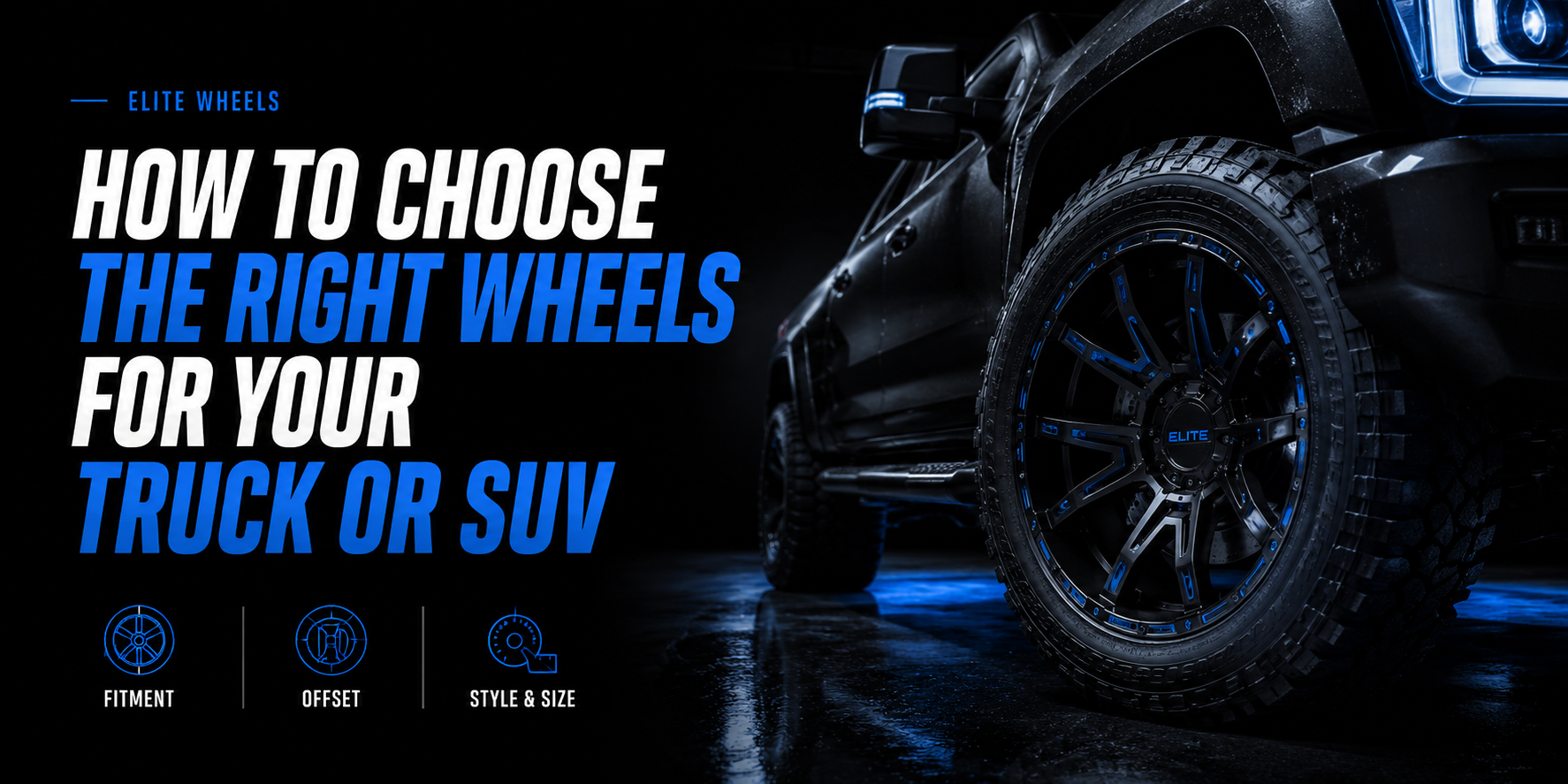
Upgrading your truck or SUV with a new set of wheels is one of the most impactful changes you can make — visually and functionally. But with thousands of options on the market, it's easy to overspend or worse, buy something that doesn't fit. Here's what you need to know before pulling the trigger.
1. Start With the Bolt Pattern
Your bolt pattern is non-negotiable. It's the number of wheel studs and the diameter of the circle they form — written as something like 6x139.7 (common on full-size trucks). If the bolt pattern doesn't match your hub, the wheel physically won't mount. Always confirm this first. Most manufacturers keep the same bolt pattern across a generation of vehicles, but it can change between model years.
2. Understand Wheel Offset
Offset is the distance between the wheel's centerline and the mounting face. A positive offset pushes the wheel inward (more tuck under the fender). A negative offset pushes it outward (the aggressive "poked" look popular on lifted trucks). Running too much negative offset can stress your wheel bearings and throw off your steering geometry, so stay within your vehicle's recommended offset range unless you know what you're doing.
3. Diameter and Width
Going up in diameter (say, from 17" to 20") generally means you'll need to adjust your tire size to maintain the same overall diameter — otherwise your speedometer, odometer, and ABS calibration all get thrown off. Width matters for tire fitment: too wide and you risk rubbing the fender or suspension components, especially when turning or flexing off-road.
4. Load Rating
This is critical and frequently overlooked. Every wheel has a load rating measured in pounds or kilograms per wheel. Trucks — especially those used for towing or hauling — need wheels rated to handle the weight. Running underrated wheels on a heavily loaded truck is a safety risk, not just a warranty issue.
5. Material: Steel vs. Aluminum Alloy
Steel wheels are cheap, heavy, and nearly indestructible — great for winter beaters or off-road rigs where you expect damage. Aluminum alloy wheels are lighter, better looking, and improve handling and fuel economy slightly. For most daily drivers and truck builds, cast or forged aluminum alloy is the right call.
6. Finish and Durability
Glossy finishes look great but require more upkeep. Matte black and satin finishes hide brake dust better and are more forgiving. If you wheel off-road, a powder-coated finish holds up better against rock scratches than chrome or polished aluminum. Beadlock wheels — which mechanically clamp the tire bead — are ideal for extreme off-road where you'll run low tire pressures.
Bottom Line
Match the bolt pattern exactly, stay within a safe offset range for your suspension setup, check the load rating, and pick a finish that fits how you use the truck. When in doubt, call us — we'd rather answer a question before the purchase than deal with a return after.