Hub-Centric Rings Explained: Why Aftermarket Wheels Sometimes Vibrate
Hub-centric rings are a small but important part of many aftermarket wheel setups. Learn what they do, when you need them, how they affect vibration, and why proper wheel centering matters for cars, trucks, and SUVs.
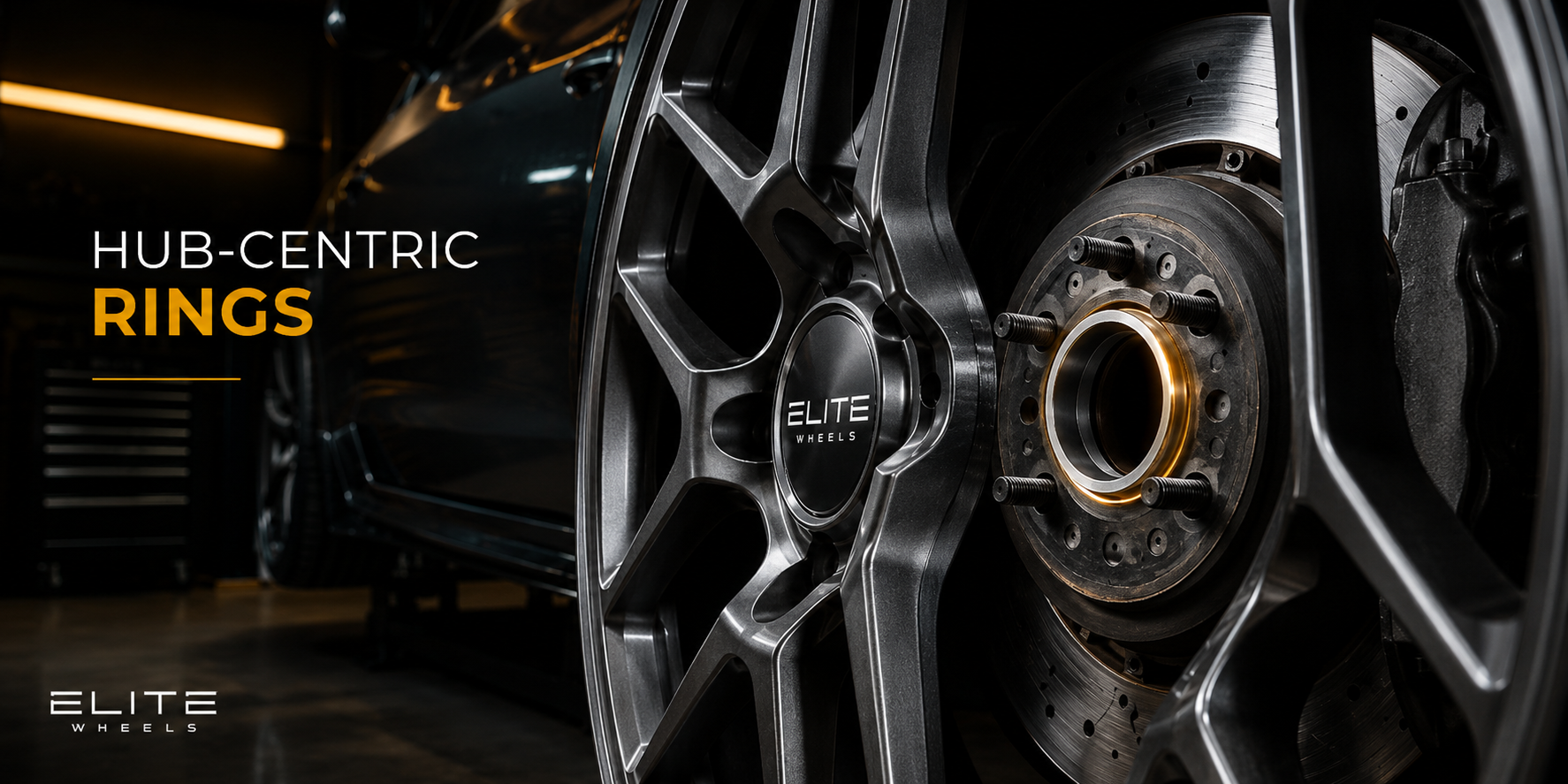
Aftermarket wheels can completely change the look of a car, truck, or SUV. The right wheel setup can improve stance, style, brake clearance, and the overall personality of the vehicle.
But a great wheel setup is not only about wheel size, offset, finish, and spoke design. The small fitment details matter too.
One of those details is the hub-centric ring.
Hub-centric rings are small rings that help center an aftermarket wheel on the vehicle’s hub. They are not flashy, and most people will never see them once the wheels are installed. But when they are needed, they can make a major difference in how smooth the vehicle feels on the road.
At Elite Wheels, we focus on complete wheel fitment. That means the wheel needs to look right, clear properly, sit correctly, and install safely. Hub-centric rings are one of those small details that can help the final setup feel right instead of frustrating.
What Is a Hub-Centric Ring?
A hub-centric ring is a small ring that fits between the vehicle’s hub and the center bore of the wheel.
The center bore is the large hole in the middle of the wheel. The hub is the raised center section on the vehicle that the wheel sits over. Ideally, the wheel center bore fits snugly over the hub so the wheel is centered properly.
When the center bore of the wheel is larger than the vehicle’s hub, a gap is created. A hub-centric ring fills that gap and helps center the wheel on the hub.
Why Aftermarket Wheels Often Need Hub-Centric Rings
Many factory wheels are designed specifically for one vehicle or one vehicle family. Because of that, the center bore often matches the hub size very closely.
Aftermarket wheels are different. Many aftermarket wheels are designed with a larger center bore so they can fit multiple vehicles with different hub sizes. This makes the wheel more versatile, but it also means the wheel may not center perfectly on every vehicle without a ring.
That is where hub-centric rings come in. They allow a wheel with a larger center bore to fit more precisely on a vehicle with a smaller hub.
Hub-Centric vs Lug-Centric Wheels
There are two common ways a wheel can be centered: hub-centric and lug-centric.
A hub-centric setup centers the wheel using the vehicle’s hub. The wheel rests snugly on the hub, and the lug nuts secure it in place.
A lug-centric setup centers the wheel using the lug nuts. In this case, the lug nuts help pull the wheel into position as they are tightened.
Many vehicles and wheel setups work best when the wheel is properly centered on the hub. If the wheel is not centered correctly, the driver may feel vibration, especially at highway speeds.
Do Hub-Centric Rings Hold the Wheel On?
No. Hub-centric rings do not hold the wheel on the vehicle.
The lug nuts or lug bolts are what clamp the wheel to the hub. The hub-centric ring is there to help center the wheel during installation and reduce the chance of vibration caused by the wheel not sitting perfectly centered.
This is important to understand. Hub-centric rings are not a replacement for proper lug nuts, correct torque, safe thread engagement, or correct wheel fitment. They are one piece of the full installation setup.
Why Wheel Vibration Happens
Wheel vibration can happen for many reasons. Common causes include tire imbalance, bent wheels, tire defects, alignment issues, suspension problems, damaged hubs, incorrect lug nuts, or wheels that are not centered properly.
If vibration starts after installing aftermarket wheels, hub centering should be one of the first things to check.
A wheel can be balanced correctly and still vibrate if it is not centered on the hub. This is why some drivers install new wheels, balance the tires, and still feel shaking through the steering wheel or seat at certain speeds.
When Do You Need Hub-Centric Rings?
You may need hub-centric rings when the center bore of the aftermarket wheel is larger than the hub bore of the vehicle.
For example, if the wheel has a 73.1 mm center bore and the vehicle hub is 66.6 mm, the wheel will fit over the hub, but it will have extra space around the center. A hub-centric ring sized from 73.1 mm to 66.6 mm would fill that space.
The exact sizes depend on the wheel and vehicle. The outer diameter of the ring matches the wheel’s center bore, and the inner diameter matches the vehicle’s hub.
How to Know What Size Hub Rings You Need
To choose the correct hub-centric rings, you need two measurements:
- The wheel center bore size
- The vehicle hub bore size
The wheel center bore is the larger measurement. The vehicle hub bore is the smaller measurement. The ring is designed to adapt the wheel to the vehicle.
It is important to get these measurements correct. A ring that is too loose will not center the wheel properly. A ring that is too tight may not install correctly or may get stuck.
Plastic vs Aluminum Hub-Centric Rings
Hub-centric rings are commonly available in plastic or aluminum.
Plastic rings are popular because they are inexpensive, easy to install, and less likely to seize onto the hub. They work well for many street-driven vehicles when properly sized.
Aluminum rings are more durable and may feel more premium, but they can corrode or seize in place if exposed to moisture, salt, or harsh conditions without proper care.
The best choice depends on the vehicle, climate, wheel setup, and how the vehicle is used.
Hub Rings for Daily Drivers
For daily drivers, hub-centric rings can help make aftermarket wheels feel smoother and more refined. If the wheels require rings and they are missing, vibration may become annoying during normal commuting or highway driving.
A daily-driven vehicle should feel stable, smooth, and predictable. Small fitment details like hub rings help support that goal.
Even if the wheels look perfect, the installation needs to be correct for the vehicle to feel right.
Hub Rings for Trucks and SUVs
Trucks and SUVs often run larger, heavier wheels and tires. That extra weight can make vibration more noticeable if the wheel setup is not centered correctly.
Lifted trucks, off-road SUVs, and larger wheel setups may also place more stress on the hardware and suspension. Proper centering, proper lug nuts, and correct torque all become even more important.
For truck and SUV builds, hub-centric rings should be checked when installing aftermarket wheels with a larger center bore than the factory hub.
Hub Rings for Performance Cars
Performance cars need precise wheel fitment. Higher speeds, aggressive braking, sticky tires, and sharper steering response can make even small vibration issues more noticeable.
If a performance car develops vibration after a wheel change, the issue should not be ignored. The wheels, tires, balance, hub rings, lug hardware, and mounting surfaces should all be inspected.
A clean performance wheel setup should look good and feel smooth.
Hub-Centric Rings and Wheel Spacers
If wheel spacers are used, hub-centric fitment becomes even more important.
A quality spacer should be properly sized for the vehicle hub and wheel center bore. Hub-centric spacers help maintain proper centering between the hub, spacer, and wheel.
Poorly fitted spacers can create vibration, unsafe clamping, or fitment problems. If spacers are part of the setup, they should be high quality, correctly sized, and installed with proper torque procedures.
Clean the Hub Before Installation
Before installing wheels or hub-centric rings, the hub surface should be clean.
Rust, dirt, corrosion, and debris can prevent the wheel or ring from seating correctly. This can create vibration or make the wheel difficult to install.
A clean mounting surface helps the wheel sit flat against the hub and supports more accurate torque during installation.
Do Hub-Centric Rings Fix Every Vibration?
No. Hub-centric rings can help solve vibration caused by a wheel not being properly centered, but they do not fix every wheel or tire problem.
If the tire is out of balance, the wheel is bent, the tire has a defect, the lug nuts are wrong, or the suspension has an issue, hub rings alone will not solve the problem.
That is why vibration should be diagnosed carefully. Hub-centric rings are one important part of the fitment checklist, not the only possible solution.
Common Hub-Centric Ring Mistakes
Many wheel vibration issues come from small mistakes during installation.
- Installing aftermarket wheels without checking center bore size
- Using the wrong hub ring size
- Forgetting to install hub-centric rings after tire service
- Using damaged or cracked plastic rings
- Installing rings over dirty or rusty hubs
- Using low-quality spacers that are not hub-centric
- Assuming balancing alone will fix every vibration
These details may seem minor, but they can make the difference between a smooth wheel setup and one that constantly feels wrong.
Build the Wheel Setup Correctly
Aftermarket wheels are one of the best upgrades you can make to a vehicle, but the full setup matters. Fitment is more than bolt pattern, offset, and wheel size.
Hub-centric rings help center the wheel when the wheel center bore is larger than the vehicle hub. When used correctly, they can reduce vibration, improve installation quality, and help the vehicle feel smoother on the road.
At Elite Wheels, we help drivers choose wheel setups with the full picture in mind. That means wheels, tires, lug nuts, hub rings, spacers, torque, and fitment all work together.
Ready to complete your wheel setup? Explore aftermarket wheels, fitment accessories, and wheel hardware at Elite Wheels.