Lug Nuts Explained: The Small Wheel Detail That Makes a Big Difference
Lug nuts may seem like a small part of your wheel setup, but the right style, seat type, thread size, and finish can affect safety, fitment, appearance, and long-term reliability. Here’s what to know before choosing lug nuts for aftermarket wheels.
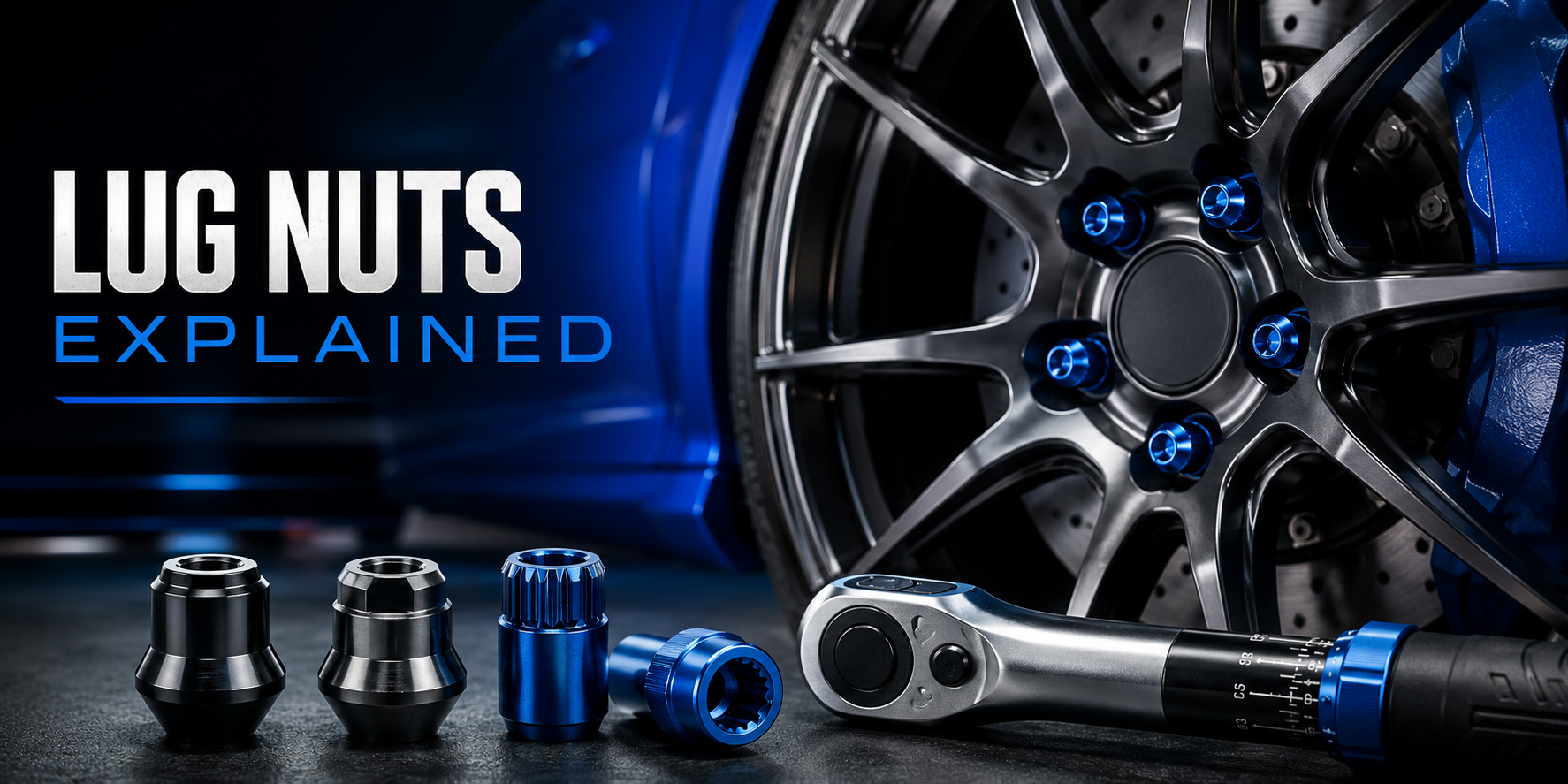
Lug nuts are one of the smallest parts of a wheel setup, but they are also one of the most important.
Most people focus on wheel size, offset, color, spoke design, and tire fitment. Those details matter, but the hardware holding the wheel to the vehicle matters just as much. The wrong lug nuts can cause poor fitment, damaged wheels, loose hardware, vibration, or unsafe installation.
At Elite Wheels, we focus on the full wheel setup. That means the wheel, tire, fitment, hardware, and installation details all need to work together. Lug nuts may not be the flashiest upgrade, but choosing the right ones protects the vehicle and helps the final build look cleaner.
Why Lug Nuts Matter
Lug nuts secure the wheel to the vehicle’s wheel studs. When they are the correct style, size, and seat type, they help clamp the wheel evenly against the hub.
If the lug nuts are wrong, the wheel may not sit properly. Even if the lug nuts seem to tighten, they may not be making the correct contact with the wheel. That can lead to vibration, damaged hardware, damaged wheels, or unsafe driving conditions.
This is especially important with aftermarket wheels because factory lug nuts do not always work with aftermarket wheel designs.
Lug Nuts Are Not Universal
One of the biggest mistakes people make is assuming all lug nuts are basically the same. They are not.
Lug nuts can vary by thread size, thread pitch, seat style, length, outside diameter, material, finish, and installation tool. A lug nut can fit onto the wheel stud and still be wrong for the wheel.
That is why lug nuts should always be matched to both the vehicle and the wheel.
Conical Seat Lug Nuts
Conical seat lug nuts are one of the most common styles used with aftermarket wheels. They have a tapered seat, usually around a 60-degree angle, that centers into the matching lug seat on the wheel.
The benefit of conical seat lug nuts is that they are widely used, easy to find, and compatible with many aftermarket wheel designs. They help center the wheel as they tighten, assuming the wheel is designed for that seat type.
However, conical lug nuts should only be used on wheels that require a conical seat. Using them on the wrong wheel can prevent proper clamping.
Ball Seat Lug Nuts
Ball seat lug nuts have a rounded seat instead of a tapered one. They are common on some factory wheel applications, especially certain European and import vehicles.
The curved seat is designed to match a rounded lug seat in the wheel. If a wheel requires ball seat hardware, using a conical seat lug nut is not correct.
This is one reason factory hardware may not work when switching to aftermarket wheels. The factory lug nut might fit the stud, but the seat may not match the new wheel.
Flat Seat Lug Nuts
Flat seat lug nuts use a flat contact surface, often with a washer. This style is used on certain factory and aftermarket applications where the wheel requires a flat clamping surface.
Flat seat lug nuts can provide a strong clamping area when used correctly, but they must match the wheel design. The washer, shank length, and seating surface all need to be correct.
Using the wrong flat seat hardware can cause the wheel to sit incorrectly or fail to clamp properly.
Mag Seat Lug Nuts
Mag seat lug nuts usually have an extended shank that goes into the wheel’s lug hole, often paired with a washer. They are used on certain wheel designs that require this specific style of hardware.
The benefit of mag seat lug nuts is that they can provide a clean and secure fit for wheels designed around them. The downside is that they are more application-specific than standard conical lugs.
Shank length matters with mag seat lug nuts. If the shank is too long or too short, the wheel may not seat properly.
Spline Drive Lug Nuts
Spline drive lug nuts are popular with aftermarket wheels because they have a smaller outside diameter and require a special spline key for installation.
This is useful when the wheel has narrow lug holes or tight lug pockets where a standard lug nut or socket may not fit. Spline drive lugs also create a cleaner, more custom look because they are usually slimmer and more compact.
Another benefit is mild theft deterrence. Because they require a special key, they are harder to remove with a standard socket. They are not the same as a true locking lug nut, but they do add an extra layer of security compared to basic hex lugs.
Locking Lug Nuts
Locking lug nuts are designed to help protect wheels from theft. They require a specific key or socket pattern to remove.
For expensive aftermarket wheels, locking lugs can be a smart addition. They are often used as one lug nut per wheel, combined with standard or spline drive lug nuts for the remaining studs.
The main benefit is security. The main drawback is that the key must be kept safe. If the key is lost, removing the wheel can become difficult and frustrating.
Open-Ended Lug Nuts
Open-ended lug nuts are hollow through the center, allowing the wheel stud to pass through the end of the lug nut.
They are commonly used on vehicles with extended wheel studs, track setups, spacers, or applications where the stud length needs to be visible. Open-ended lug nuts can also make it easier to confirm thread engagement.
The downside is that the exposed stud threads may be more vulnerable to dirt, moisture, and corrosion, especially on daily-driven vehicles or trucks used in harsh conditions.
Closed-End Lug Nuts
Closed-end lug nuts have a covered end. They are common on street vehicles because they protect the wheel stud threads from dirt, water, and road grime.
They also provide a cleaner finished appearance, especially on daily-driven cars, trucks, and SUVs.
The main thing to watch is stud length. If the wheel studs are too long for the closed-end lug nut, the lug nut can bottom out before properly clamping the wheel. That can create an unsafe installation even if the lug nut feels tight.
Extended Lug Nuts
Extended lug nuts are longer than standard lug nuts. They are often used for style, easier installation, track use, or wheels with deeper lug pockets.
On some builds, extended lug nuts can make the wheel hardware more visible and aggressive. They can also be easier to handle when removing and installing wheels often.
However, extended lug nuts should still be chosen based on correct thread size, seat type, and wheel compatibility. Appearance should never come before safe fitment.
Lightweight Lug Nuts
Some lug nuts are made from lightweight materials such as aluminum or titanium. These are often chosen for performance builds, track cars, or show builds where weight and appearance matter.
The benefit is reduced weight and a more premium look. Titanium lug nuts are known for strength and corrosion resistance, while aluminum lugs are lightweight and available in many colors.
The downside is that lightweight lug nuts need to be chosen carefully. Some materials may not be ideal for heavy vehicles, frequent removal, harsh conditions, or improper installation. For trucks, SUVs, and daily-driven vehicles, durability should be the priority.
Steel Lug Nuts
Steel lug nuts are one of the most common and practical choices. They are strong, durable, and suitable for many daily-driven cars, trucks, SUVs, and off-road vehicles.
For heavier vehicles or builds that see rough use, steel lug nuts are often the safer and more practical option. They may not be as flashy as colored aluminum lugs, but they are reliable when properly matched to the wheel and vehicle.
For most street, truck, and off-road builds, quality steel lug nuts are hard to beat.
Finish and Appearance
Lug nuts also affect the final look of the wheel setup. Chrome, black, red, blue, titanium-look, neo chrome, and other finishes can change the overall appearance of the build.
Black lug nuts can create a clean, aggressive look on black wheels. Chrome or polished lugs can work well with machined or polished finishes. Colored lug nuts can add contrast, but they should be used carefully so the build does not look too busy.
The best lug nut finish should match the wheel, vehicle color, brake setup, and overall style of the build.
Thread Size and Pitch
Thread size and pitch must match the vehicle’s wheel studs. Common examples include sizes like M12x1.5, M12x1.25, M14x1.5, and 1/2-20, but the correct size depends on the vehicle.
Using the wrong thread pitch can damage the wheel studs or prevent the lug nuts from tightening correctly. Never force a lug nut onto a stud. If it does not thread smoothly by hand at first, something may be wrong.
Correct thread size is one of the most basic but most important parts of choosing wheel hardware.
Seat Type Is Just as Important as Thread Size
A lug nut can have the correct thread size and still be wrong if the seat type does not match the wheel.
This is especially important with aftermarket wheels. Many aftermarket wheels use conical seat lugs, while some factory wheels use ball seat or flat seat hardware. Reusing factory lug nuts on aftermarket wheels can be unsafe if the seat type is wrong.
The lug nut must match the vehicle’s studs and the wheel’s seat design.
Benefits of Choosing the Right Lug Nuts
The right lug nuts do more than hold the wheel on. They support the entire wheel setup.
- They help the wheel seat correctly
- They support proper clamping force
- They reduce the risk of vibration
- They protect wheel studs and threads
- They can improve wheel security
- They complete the visual style of the wheel setup
- They help aftermarket wheels fit the way they were designed to fit
Common Lug Nut Mistakes
Many wheel installation problems come from simple hardware mistakes.
- Using factory lug nuts on wheels that need aftermarket hardware
- Choosing the wrong seat type
- Using the wrong thread pitch
- Using closed-end lug nuts that are too short for the studs
- Forgetting the spline key or lock key
- Over-tightening lightweight lug nuts
- Choosing lug nuts only by color instead of fitment
- Using cheap hardware on expensive wheels
These mistakes can damage wheels, studs, and hardware. More importantly, they can create safety issues.
Build the Wheel Setup Correctly
Lug nuts may be small, but they are a critical part of the wheel package. The right hardware improves safety, supports proper fitment, protects the wheel, and completes the final look of the build.
Before installing aftermarket wheels, make sure the lug nuts match the vehicle, the wheel seat type, the thread size, and the intended use of the vehicle.
At Elite Wheels, we help drivers think beyond wheel style alone. Fitment, hardware, tires, stance, and installation details all matter when building a wheel setup that looks right and works correctly.
Ready to complete your wheel setup? Explore aftermarket wheels, lug nuts, and wheel accessories at Elite Wheels.
```