Performance Exhaust Systems: What You Actually Gain
Aftermarket exhaust is one of the most popular performance upgrades — and one of the most misunderstood. Here's what the numbers actually say.
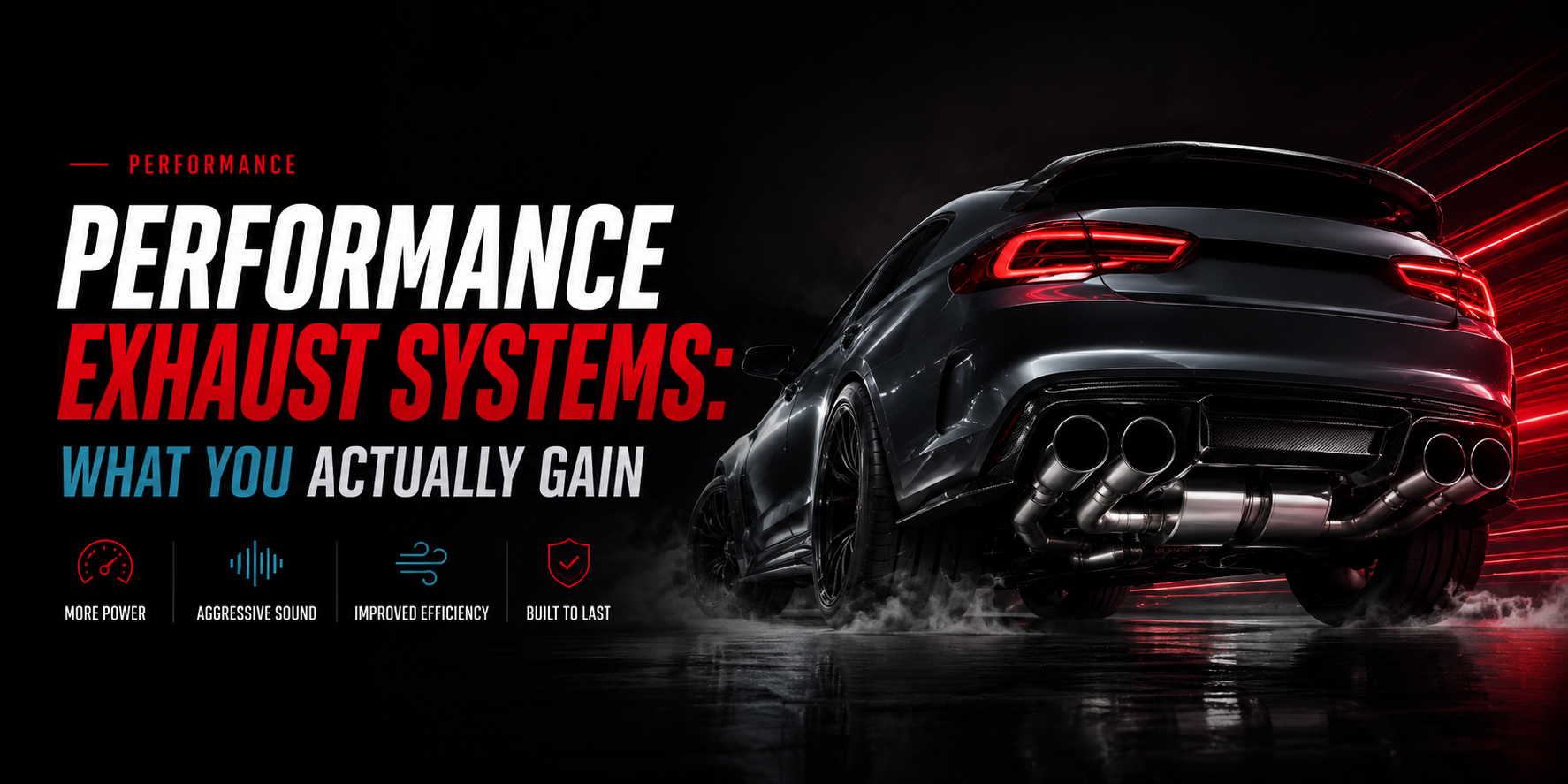
Walk into any car meet and you'll hear more opinions about exhaust than almost any other topic. Some of them are even correct. Here's a grounded look at what a performance exhaust system actually does, what you can realistically expect, and where the marketing overpromises.
What the Stock Exhaust Is Optimizing For
Factory exhaust systems are engineered around a specific set of priorities: emissions compliance, noise regulations, cost, durability over a 100,000+ mile lifespan, and adequate performance across the full RPM range. They're not designed to maximize power — they're designed to be good enough while meeting legal requirements and costing as little as possible to manufacture. This leaves meaningful room for improvement in specific use cases.
Types of Exhaust Upgrades
Cat-back exhaust: Replaces everything from the catalytic converter back — mid-pipe, resonator, muffler, and tips. This is the most common aftermarket upgrade. Legal in nearly all jurisdictions, straightforward to install, and produces the most audible difference in sound. Power gains are modest on naturally aspirated engines (typically 5–15 hp) but more significant on turbocharged or supercharged engines where exhaust flow restriction has a bigger impact.
Axle-back exhaust: Replaces only the muffler and tips behind the rear axle. The cheapest and easiest change. Primarily affects sound with minimal power impact. A good choice if tone is your main goal.
Header-back exhaust: A full system replacement from the exhaust manifold back. The most comprehensive and expensive option. On performance builds, pairing aftermarket headers with a cat-back delivers the largest power gains — sometimes 20–40+ hp on modified engines — because headers improve exhaust scavenging at the cylinder head.
High-flow cats or test pipes: Replacing restrictive catalytic converters with high-flow alternatives or straight pipes (off-road/track use only) can meaningfully reduce back pressure on high-performance applications. Be aware that removing functioning catalytic converters on street-driven vehicles violates federal emissions law in the United States.
Realistic Power Gains
On a stock naturally aspirated engine, a cat-back alone typically yields 3–8 wheel horsepower. That's real — you'll feel it at high RPM — but it's not a transformation. The bigger gains come on forced-induction engines (turbo and supercharged) where the turbine needs to spool efficiently and back pressure is more impactful. A quality cat-back on a turbocharged truck or performance car can yield 10–25 hp and improve boost response noticeably.
The Sound Factor
For many buyers, sound is the primary motivation — and that's a completely valid reason to upgrade. Exhaust tone is subjective and highly dependent on the specific system, vehicle, and engine combination. Stainless steel mandrel-bent pipes with a quality muffler will generally produce a deeper, more refined sound than stock. Resonator deletes produce a raspier, more aggressive note. Research sound clips for your specific vehicle and system before buying — what sounds great on one platform can drone unbearably on another at highway speeds.
Build Quality and Materials
409 stainless steel is entry-level and adequate for most applications. 304 stainless is higher grade, better corrosion resistance, and typically found on premium systems. Mandrel bending maintains consistent pipe diameter through bends (versus crush bending which restricts flow). Aluminized steel is cheap and will rust out faster — avoid it for permanent installs.
Bottom Line
A performance exhaust is a worthwhile upgrade for sound, a moderate upgrade for power on forced-induction platforms, and a mild upgrade on stock naturally aspirated engines. Don't expect to feel a seat-of-the-pants transformation on a stock V6 — but do expect a significantly better exhaust note and a more connected driving experience.