Recovery Gear Every Off-Road Build Should Have Before the Trail Gets Serious
Recovery gear is one of the most important parts of any off-road build. From tow straps and recovery boards to winches, shackles, and traction tools, here’s what every truck, Jeep, SUV, or UTV should carry before heading off pavement.
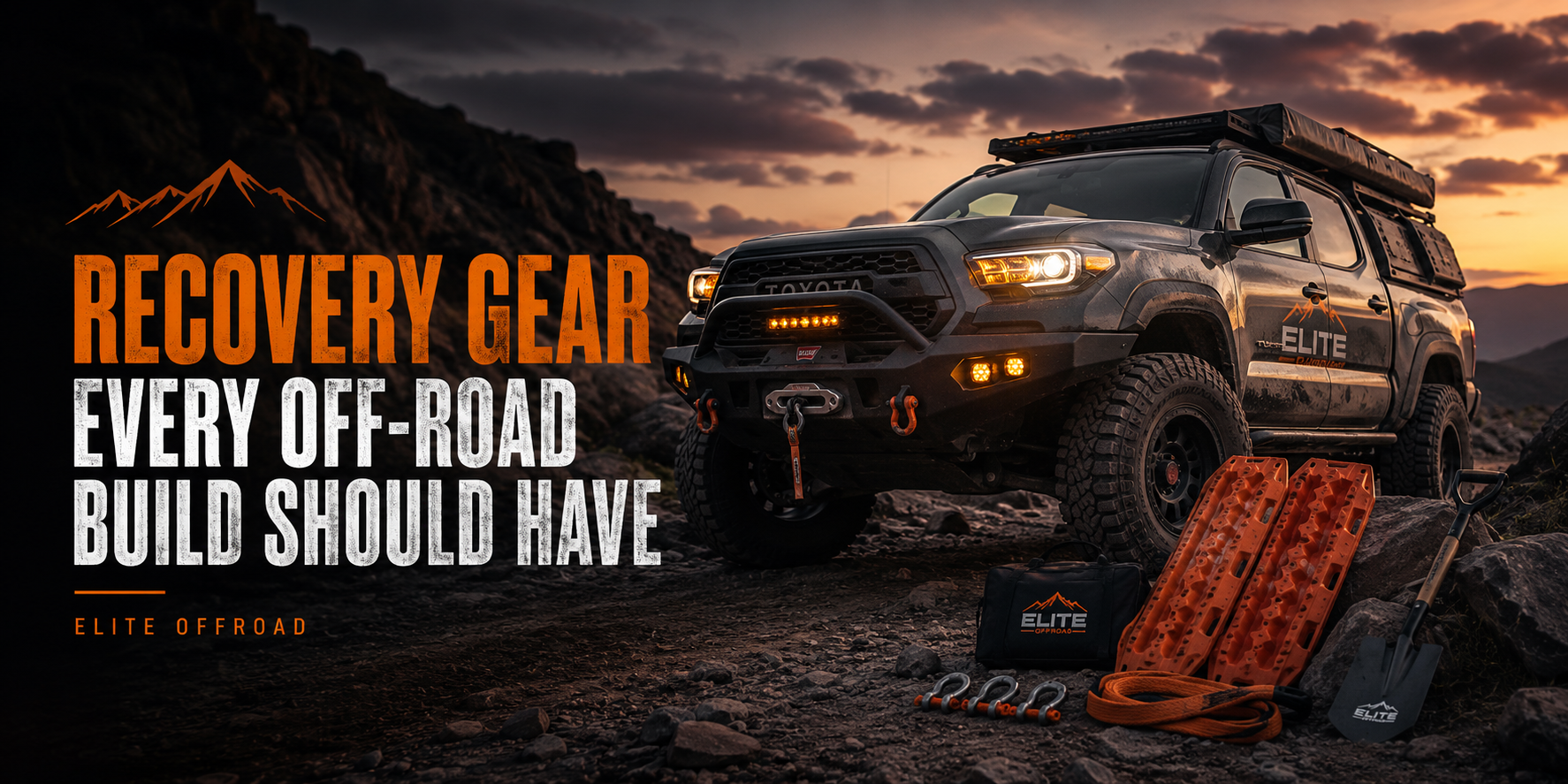
Off-road upgrades are usually judged by how aggressive they look. Lift kits, wheels, tires, lights, bumpers, and suspension all get attention because they completely change the presence of a truck, Jeep, SUV, or UTV.
But once the trail gets serious, one of the most important upgrades is not always the flashiest.
Recovery gear matters.
It does not matter how capable the build looks if it gets stuck with no way out. Mud, sand, snow, rocks, steep climbs, loose dirt, and washed-out trails can stop even a well-built rig. The right recovery setup gives you a way to get moving again without turning a fun trail day into a stressful situation.
At Elite Offroad, we believe every off-road build should be planned around real use. That means traction, protection, visibility, suspension, and recovery all work together. Recovery gear is not just for extreme builds. It is basic trail preparation.
Why Recovery Gear Matters
Getting stuck is part of off-roading. It can happen to beginners, experienced drivers, stock vehicles, and heavily modified rigs. The difference is whether you are prepared when it happens.
Recovery gear gives you options. It can help you get out of mud, regain traction in sand, pull a vehicle away from an obstacle, or safely assist another driver. Without the right gear, you may be forced to rely on luck, another vehicle, or a recovery situation that could have been avoided with better preparation.
The goal is not to expect problems. The goal is to be ready for them.
Start With the Basics
Not every off-road vehicle needs the most extreme recovery setup right away. A weekend trail truck and a dedicated rock crawler do not need the same equipment. A UTV used on forest trails needs a different setup than a full-size truck built for mud and overlanding.
Still, there are basic recovery tools that make sense for almost every off-road build.
Recovery boards, tow straps, shackles, gloves, a shovel, and a properly rated recovery point can make a huge difference. These tools are simple, but they can solve many common trail problems before they become serious.
Recovery Boards
Recovery boards are one of the most useful tools for sand, mud, snow, and loose terrain. They give the tires something to grab when the ground is too soft or slippery.
For trucks, Jeeps, SUVs, and UTVs, recovery boards are especially helpful because they do not always require another vehicle. If you are stuck in sand or mud, placing boards under the tires can help the vehicle climb back onto firmer ground.
They are also easy to mount, easy to carry, and useful in a wide range of trail situations. For many off-road drivers, recovery boards are one of the first pieces of gear worth adding.
Tow Straps and Recovery Straps
A quality recovery strap is another essential item. It allows another vehicle to help pull you out when you are stuck.
It is important to use the right type of strap for the job. A basic tow strap and a kinetic recovery strap are not the same thing. Tow straps are usually used for steady pulling, while kinetic recovery straps are designed to stretch and help create momentum during a recovery.
Whatever strap you choose, it needs to be properly rated for the vehicle. A full-size truck requires stronger gear than a small UTV. Using underrated equipment can be dangerous and should be avoided.
Soft Shackles and D-Ring Shackles
Shackles are used to connect straps, recovery points, and other recovery gear. They may seem like a small detail, but they are critical to a safe recovery setup.
D-ring shackles are traditional metal recovery connectors. They are strong and widely used, but they need to be handled carefully because metal recovery gear can be dangerous if something fails.
Soft shackles have become popular because they are lighter, easier to store, and safer in many recovery situations when used correctly. They are especially useful for trail kits where weight and storage space matter.
The most important thing is choosing shackles that are properly rated and compatible with your recovery points.
Proper Recovery Points
Recovery gear is only useful if the vehicle has safe places to attach it.
Factory tie-down points are not always the same as recovery points. Some factory hooks may work for light recovery, while others are not designed for serious pulling. This is why many off-road builds add upgraded bumpers, tow hooks, hitch recovery points, or frame-mounted recovery points.
A proper recovery point should be strong, secure, and designed for recovery loads. Attaching a strap to the wrong part of the vehicle can cause damage or create a dangerous situation.
Winches
A winch is one of the most valuable recovery tools for serious off-road builds. It can help pull your vehicle out when another vehicle is not available or when the recovery angle makes a simple strap pull difficult.
Winches are especially useful for rock crawling, mud, remote trails, overlanding, and solo off-road driving. They give you more independence and more control during a recovery.
However, a winch is only part of the system. You also need the right accessories, including a tree saver, gloves, shackles, and a safe understanding of how to use the winch properly.
Tree Savers and Anchors
A tree saver strap protects trees and gives you a safer anchor point when using a winch. Wrapping a winch line directly around a tree can damage the tree and can also damage the line.
For responsible off-roading, a tree saver is an important part of a winch kit. It helps protect the trail environment while giving you a strong recovery point.
In areas without trees, drivers may need other anchor options depending on terrain. The right setup depends on where you drive most often.
Shovels and Hand Tools
A shovel may not seem exciting, but it can solve a lot of trail problems. If your tires are buried in sand, mud, or snow, clearing material from around the tires can make recovery much easier.
A compact shovel is useful for trucks, Jeeps, SUVs, and UTVs. It does not take much space, and it can help with tire recovery, clearing obstacles, building a better traction path, or digging out recovery boards.
Simple tools often make the biggest difference when you are stuck.
Air Down and Air Back Up
Tire pressure is a major part of off-road traction. Airing down can help the tire create a larger contact patch, improving grip on sand, rocks, snow, and rough trails.
But if you air down, you need a way to air back up before returning to the road. That is why a portable air compressor is a smart addition to many off-road builds.
Airing down is not a replacement for recovery gear, but it can help prevent getting stuck in the first place. Combined with the right tires and recovery tools, it gives the vehicle more control and capability.
Gloves, Storage, and Safety Gear
Recovery situations can involve sharp edges, hot components, mud, tensioned straps, and heavy equipment. Gloves help protect your hands and make it easier to handle recovery gear safely.
Storage also matters. Recovery gear should be easy to access when you need it. If your straps, shackles, or gloves are buried under camping gear or tools, they will be harder to use when the vehicle is stuck.
A dedicated recovery bag or storage box can keep everything organized and ready.
Recovery Gear for UTVs and Side-by-Sides
UTVs and side-by-sides need recovery gear too. Even though they are smaller than trucks and Jeeps, they can still get stuck in mud, sand, snow, or uneven terrain.
A UTV recovery kit may include a compact winch, soft shackles, recovery straps, a small shovel, gloves, and recovery boards sized for the vehicle. Because storage space is limited, compact and lightweight gear is especially useful.
For riders who explore remote trails, recovery gear is not optional. It is part of being prepared.
Match the Gear to the Vehicle
Recovery gear should always match the vehicle. A lightweight UTV does not need the same gear as a heavy diesel truck. A Jeep Wrangler on 35-inch tires has different needs than a full-size overland truck loaded with camping gear.
Vehicle weight, tire size, terrain, recovery points, and how the vehicle is used all matter. The stronger and heavier the vehicle, the more important proper ratings become.
Buying recovery gear just because it looks tough is not enough. It needs to be rated, compatible, and appropriate for the build.
Do Not Wait Until You Are Stuck
The worst time to think about recovery gear is after the vehicle is already stuck. By then, your options are limited.
Recovery gear should be part of the build plan from the beginning. Just like tires, suspension, lighting, and protection, recovery equipment helps make the vehicle more capable and more prepared for real use.
Even a simple recovery setup can make trail days safer and less stressful.
Build for Confidence Off-Road
Off-roading is about capability, confidence, and preparation. The right recovery gear gives you more control when the trail gets difficult.
Whether you drive a lifted truck, Jeep, Bronco, 4Runner, Tacoma, full-size SUV, or UTV, recovery equipment should be part of the setup. It helps protect the vehicle, supports safer trail use, and gives you a way forward when traction runs out.
At Elite Offroad, we help drivers build vehicles with purpose. That means choosing upgrades that look right, perform correctly, and support the way the vehicle is actually used.
Ready to prepare your build for the trail? Explore off-road recovery gear, trail equipment, and vehicle upgrades at Elite Offroad.