Tire Date Codes Explained: How to Read Tire Age Before You Buy
Tire age matters more than most drivers realize. Learn how to read DOT date codes, understand tire manufacturing dates, spot aging signs, and know what to check before buying new, used, or replacement tires.
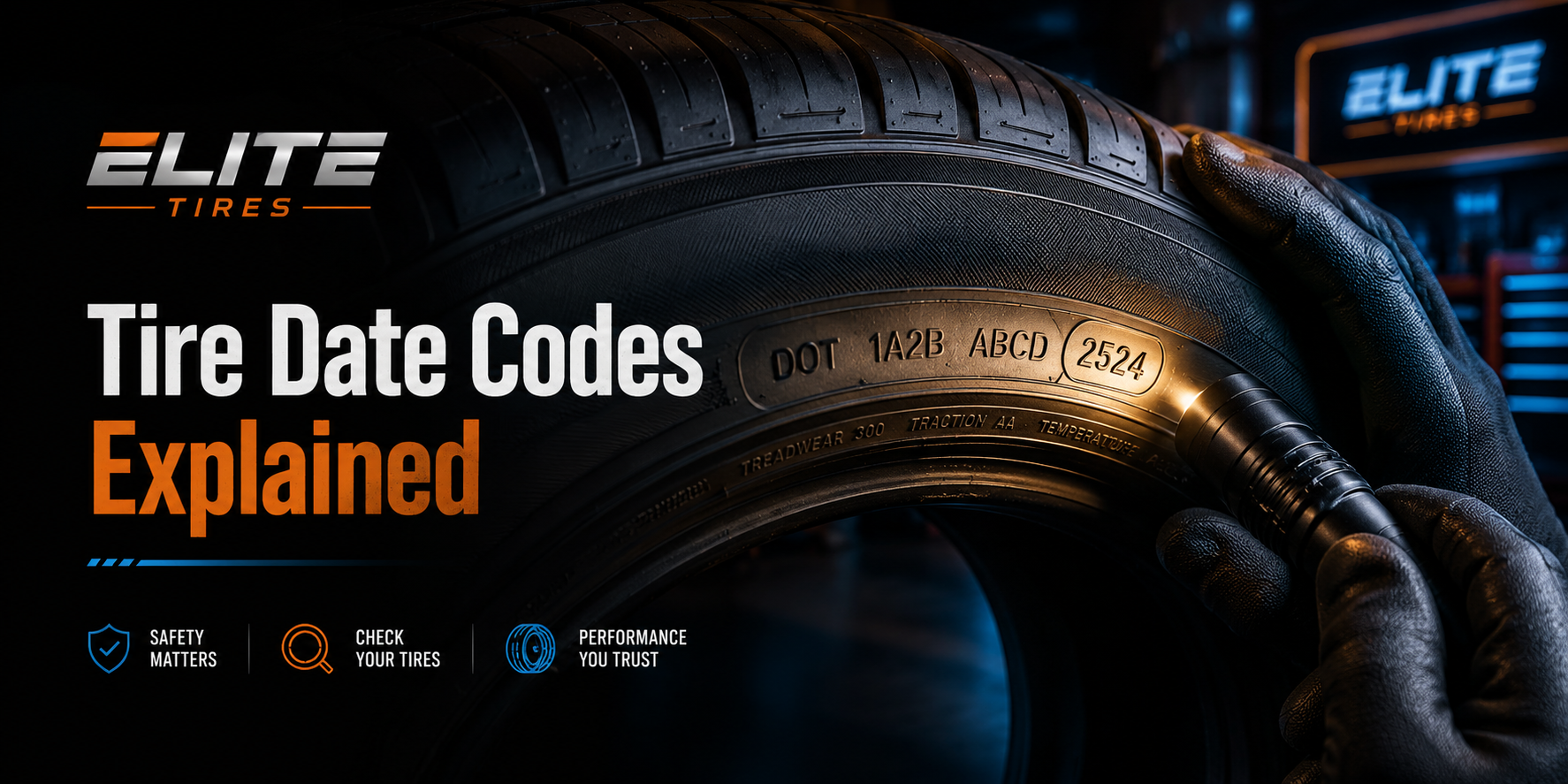
Tires are one of the most important safety and performance parts on any vehicle, but many drivers only look at tread depth, tire size, brand, and price.
Those details matter, but there is another number on the sidewall that deserves attention: the tire date code.
The tire date code tells you when the tire was manufactured. That matters because tires age even when they are not driven every day. Heat, sunlight, storage conditions, weather, road use, and time can all affect the rubber and internal structure of a tire.
At Elite Tires, we help drivers choose tires with the full picture in mind. That means tire size, load rating, speed rating, tread type, driving style, weather conditions, and tire age all matter.
What Is a Tire Date Code?
A tire date code is part of the DOT Tire Identification Number on the tire sidewall. This code helps identify when and where the tire was manufactured.
For most modern tires, the part drivers care about most is the final four digits of the DOT code. Those four digits tell you the week and year the tire was made.
For example, if the last four digits are 2524, the tire was manufactured during the 25th week of 2024. If the last four digits are 4819, the tire was made during the 48th week of 2019.
This date does not tell you when the tire was installed or first used. It only tells you when the tire was manufactured.
Where to Find the Tire Date Code
The DOT code is found on the sidewall of the tire. Look for the letters DOT followed by a series of letters and numbers.
The full date code may only appear on one side of the tire. That means if you do not see the final four-digit date code on the outside sidewall, it may be facing inward toward the vehicle.
This can be annoying, but it is normal. On some vehicles, you may need to look behind the tire, turn the wheel, use a flashlight, or check when the wheel is removed.
How to Read the Last Four Digits
The tire date code is simple once you know what to look for.
The first two digits represent the week of the year. The last two digits represent the year.
- 1123 means the tire was made during the 11th week of 2023
- 3022 means the tire was made during the 30th week of 2022
- 4720 means the tire was made during the 47th week of 2020
- 0525 means the tire was made during the 5th week of 2025
Once you understand this format, you can quickly check how old a tire is before buying it, installing it, or trusting it on a long drive.
Why Tire Age Matters
Tires are made from rubber compounds, steel belts, fabric, and other materials that are designed to work together under load, heat, speed, and road conditions.
As tires age, the rubber can become harder, drier, and less flexible. This can affect traction, ride quality, wet grip, braking, and long-term durability. Older tires may also be more likely to show cracking, dry rot, or sidewall deterioration.
This is why a tire can have plenty of tread left and still be a poor choice if it is too old or has been stored badly.
Tread Depth Is Not the Whole Story
A tire with deep tread is not automatically a good tire. Tread depth tells you how much usable tread remains, but it does not tell you the condition of the rubber or the age of the tire.
This is especially important with low-mileage vehicles, weekend cars, trailers, RVs, collector cars, spare tires, and vehicles that sit for long periods. These tires may look barely used, but they can still be aging in the background.
If the tire is old, cracked, hardened, or damaged, tread depth alone is not enough to make it safe.
How Old Is Too Old for a Tire?
There is not one single age number that applies perfectly to every tire in every situation. Tire age depends on storage, climate, usage, vehicle type, load, maintenance, and driving conditions.
That said, many vehicle and tire manufacturers recommend replacing tires somewhere around the six to ten year range, even if the tread is not fully worn out.
This does not mean every six-year-old tire is automatically unsafe. It also does not mean every tire under six years old is automatically good. Age is one important factor that should be considered along with condition, tread depth, cracking, repairs, storage, and how the tire has been used.
New Tires Can Still Have an Older Date Code
A tire does not always arrive at a store immediately after it is made. Tires may spend time in warehouses, distribution centers, or shop inventory before they are sold.
That means a “new” tire can sometimes have a manufacturing date that is several months old or even older.
This is not always a problem if the tire was stored correctly and is still within an acceptable age range. But it is still worth checking. If you are paying for new tires, you should know what you are getting.
Should You Buy Tires With an Older Date Code?
It depends.
A tire that is a few months old is usually normal. A tire that is one or two years old may still be acceptable depending on the tire, storage conditions, price, and intended use. But if a tire is several years old before it has ever been installed, that should raise questions.
For high-performance cars, heavy trucks, family vehicles, long-distance travel, or vehicles driven in extreme heat, tire age deserves extra attention.
The older the date code, the more carefully the tire should be inspected before purchase.
Used Tires Need Extra Caution
Used tires can be tempting because they cost less, but they require careful inspection.
When buying used tires, the date code is only one part of the story. You also need to check tread depth, sidewall condition, repairs, plugs, patches, uneven wear, cupping, cracking, bead damage, and signs of impact damage.
A used tire with a recent date code can still be unsafe if it was abused. An older used tire with good tread can still be a bad choice if the rubber is aged or cracked.
With used tires, the biggest problem is that you often do not know the full history of the tire.
Watch for Dry Rot and Cracking
Dry rot is a common sign of tire aging or environmental damage. It often appears as small cracks in the sidewall, tread area, or between tread blocks.
Small surface cracks may not always mean immediate failure, but cracking should never be ignored. Deep cracks, widespread cracking, or cracking near the sidewall should be taken seriously.
Dry rot can be caused by age, heat, sunlight, ozone exposure, poor storage, low use, and harsh conditions.
Storage Conditions Matter
Tire age is not only about time. Storage conditions can make a big difference.
Tires stored indoors in a cool, dry, dark place usually age better than tires stored outside in direct sunlight, heat, moisture, or extreme temperature changes.
Heat is especially hard on tires. Vehicles in hot climates, tires mounted outside, and spares stored under trucks or SUVs may age faster than tires kept in controlled conditions.
This is why two tires with the same date code can be in very different condition.
Do Spare Tires Age Too?
Yes. Spare tires age even if they are rarely used.
This is one of the most commonly overlooked tire safety issues. A spare tire may have full tread and still be old, dry, underinflated, or cracked. If you need it during an emergency, that is the worst time to discover it is not usable.
Full-size spares, compact temporary spares, trailer spares, and off-road spares should all be inspected for date code, pressure, cracking, and overall condition.
Trailer, RV, and Camper Tires
Tire age is especially important for trailers, RVs, campers, and vehicles that sit for long periods.
These tires may not wear out from mileage, but they can still age from load, sunlight, heat, and sitting in one position for extended periods. Sidewall cracking and internal degradation can become an issue before the tread looks worn.
Before long road trips, towing, or seasonal travel, trailer and RV tires should be inspected carefully.
Performance Tires and Tire Age
Performance tires are designed for grip, steering response, braking, and handling. As rubber ages, the tire may not perform the same way it did when newer.
For sports cars, muscle cars, track cars, and high-speed vehicles, tire condition matters even more. A tire that is old, hardened, or cracked may not deliver the traction the vehicle needs.
If you drive aggressively or rely on the tire for high-performance use, do not judge the tire by tread depth alone.
Off-Road and All-Terrain Tires
Off-road and all-terrain tires also need age checks. Trucks, Jeeps, SUVs, and overland builds may carry heavy loads, drive on rough terrain, and expose tires to rocks, heat, mud, and weather.
Large tires can be expensive, so some drivers try to stretch them longer than they should. But a tire that is aged, cracked, or damaged can create serious problems on the trail or highway.
For off-road vehicles, inspect the tread blocks, sidewalls, bead area, and spare tire regularly.
What About Tires Made Before 2000?
Modern tire date codes use four digits for the week and year. Older tires made before 2000 used a three-digit date code.
If a tire has an old three-digit date code, it is extremely old and should not be treated as a safe road tire. Even if it looks interesting for a collector vehicle or display, it should not be trusted for normal driving.
What to Check Before Buying Tires
Before buying tires, it is smart to check more than the price.
- Confirm the correct tire size for the vehicle
- Check the DOT date code
- Inspect for cracks, cuts, bubbles, or sidewall damage
- Check the tread depth and wear pattern
- Confirm the load rating and speed rating
- Make sure the tire type matches how you drive
- Ask about storage if the tire is older new inventory
- Inspect used tires carefully before buying
When to Replace Tires
Tires should be replaced when they are worn out, damaged, aged beyond a safe service range, showing significant cracking, or no longer appropriate for the vehicle and driving conditions.
Do not wait for a tire to fail before replacing it. Warning signs like vibration, sidewall bulges, deep cracks, uneven wear, or repeated pressure loss should be inspected right away.
If you are unsure about the age or condition of your tires, have them inspected by a qualified tire professional.
Tire Dates Are Part of the Bigger Picture
The DOT date code is not the only thing that matters, but it is an important part of tire selection and tire safety.
A good tire choice should consider age, condition, tread depth, size, load rating, speed rating, climate, driving style, vehicle weight, and how the tire will actually be used.
At Elite Tires, we help drivers choose tires with purpose. Whether you are replacing daily driver tires, upgrading a truck, building an off-road setup, or choosing performance tires, tire age should be part of the conversation.
Ready to choose the right tires for your vehicle? Explore tire options, fitment guidance, and tire upgrades at Elite Tires.
```