Tire Load Ratings and Speed Ratings Explained: What Those Numbers Really Mean
Tire load ratings and speed ratings are more than random sidewall codes. They tell you how much weight a tire can carry, how fast it is designed to perform, and whether it is the right choice for your car, truck, SUV, or performance build.
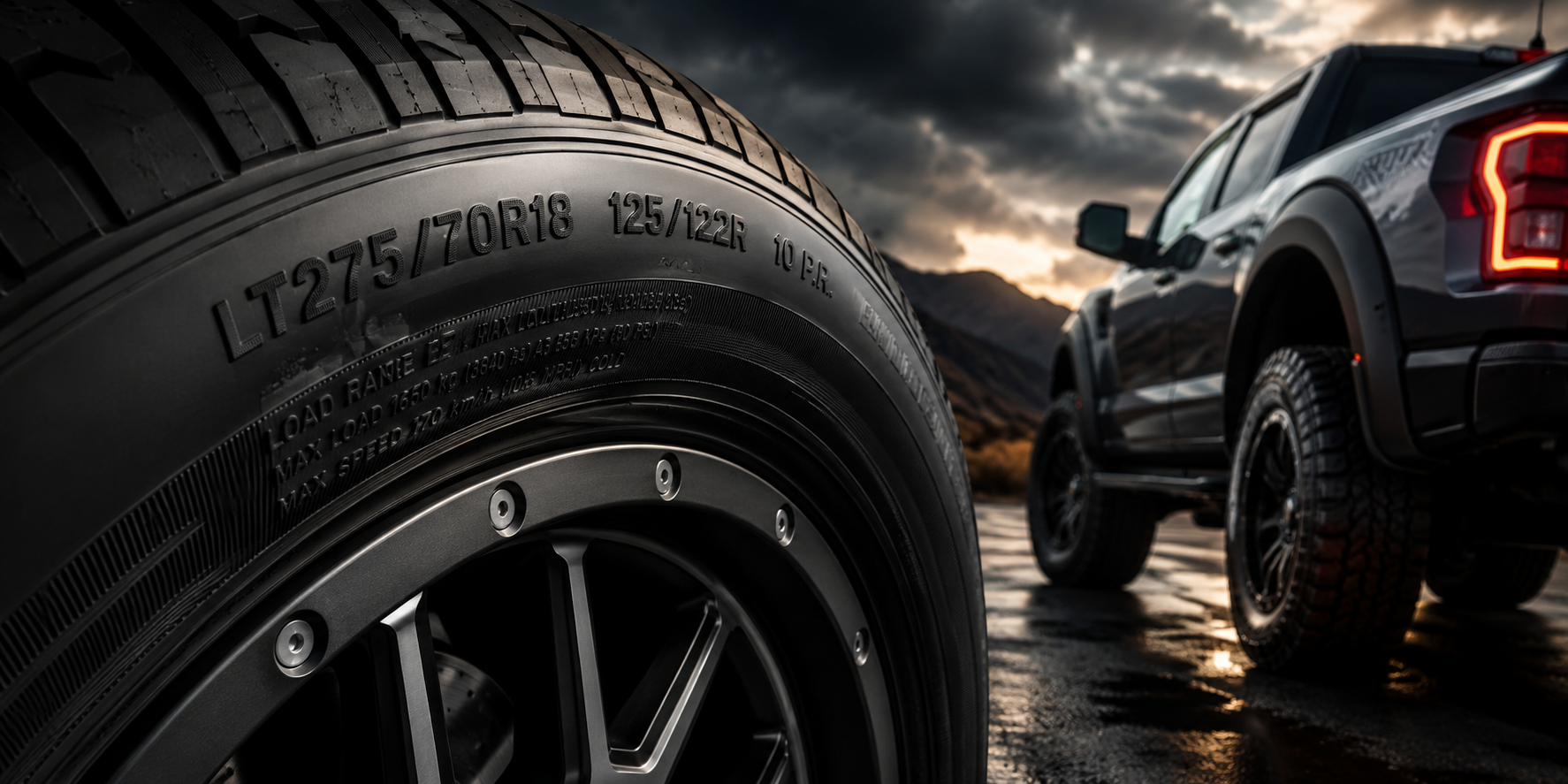
When most drivers shop for tires, they focus on size, brand, tread pattern, price, and whether the tire looks right on the vehicle.
Those details matter, but there are two important ratings that are easy to overlook: load rating and speed rating.
These ratings are not just random letters and numbers on the tire sidewall. They tell you how much weight the tire is designed to carry and how fast the tire is designed to safely perform under proper conditions.
At Elite Tires, we believe tire choice should be based on the full vehicle setup. That means size, fitment, tread design, compound, climate, driving style, load rating, speed rating, and real-world use all matter.
What Is a Tire Load Rating?
A tire load rating tells you how much weight a tire can safely support when properly inflated. This is usually shown as a load index number on the tire sidewall.
The load index does not directly show pounds or kilograms by itself. Instead, the number corresponds to a maximum load capacity on a load index chart.
For example, a tire with a higher load index can carry more weight than a tire with a lower load index. This matters for trucks, SUVs, towing, hauling, family vehicles, work vehicles, and any vehicle that carries extra weight.
Why Load Rating Matters
Every vehicle places weight on its tires. That includes the vehicle itself, passengers, cargo, fuel, tools, accessories, trailers, and anything added to the build.
If the tires do not have enough load capacity, they may run hotter, wear faster, handle poorly, or become unsafe under heavy use.
This is especially important for trucks and SUVs. Larger vehicles often carry more weight, tow trailers, haul cargo, or run heavier wheels and tires. Choosing a tire only because it fits the wheel size is not enough. The tire must also support the vehicle properly.
Load Index vs Load Range
Load index and load range are related, but they are not the same thing.
The load index is the numerical rating that corresponds to a specific weight capacity. Load range is commonly used on light truck tires and refers to the tire’s strength category and inflation capability.
You may see light truck tires marked with load ranges such as C, D, E, or F. A higher load range generally indicates a tire designed for heavier-duty use and higher inflation pressure.
For trucks, towing, hauling, and off-road builds, load range can be an important part of choosing the right tire.
Passenger Tires vs Light Truck Tires
Passenger tires and light truck tires are built for different priorities.
Passenger tires are often designed for comfort, fuel efficiency, low noise, and everyday driving. They can be a good fit for cars, crossovers, and lighter SUVs.
Light truck tires are often built with stronger construction for heavier loads, towing, hauling, and rougher use. They may ride firmer, weigh more, and sometimes create more road noise, but they can provide the strength needed for heavier vehicles and harder use.
The right choice depends on the vehicle and how it is used.
When You May Need a Higher Load Rating
A higher load rating may be important if your vehicle regularly carries extra weight or sees harder use.
This includes towing, hauling tools, carrying camping gear, running a roof tent, using a truck bed rack, installing steel bumpers, adding a winch, driving off-road, or using the vehicle for work.
Overland builds are a good example. A truck or SUV may start at a normal weight, but once it has armor, recovery gear, water, fuel, storage drawers, roof racks, and camping equipment, the tire load requirement becomes more serious.
Do Not Overdo Load Rating Without a Reason
A stronger tire is not always automatically better for every driver.
A heavy-duty light truck tire may be more durable, but it can also ride firmer, weigh more, reduce fuel economy, and feel harsher on a daily-driven vehicle.
If your vehicle does not tow, haul, or carry heavy loads, an overly stiff tire may not give you the best driving experience.
The goal is to choose a tire that matches the vehicle’s actual use, not simply the highest rating available.
What Is a Tire Speed Rating?
A tire speed rating is the letter code that indicates the maximum speed capability of a tire under proper conditions.
You may see speed rating letters such as T, H, V, W, Y, or others on the tire sidewall. Higher speed ratings generally indicate tires designed to handle higher speeds and greater heat buildup.
Speed rating is not only about driving fast. It can also affect handling, heat resistance, steering feel, braking response, and the overall performance character of the tire.
Why Speed Rating Matters
Speed rating matters because tires create heat as they roll. Higher speeds generate more heat, and the tire must be designed to handle that stress.
A tire with an insufficient speed rating may not be appropriate for a performance car, highway driving, heavy loads, or aggressive use.
Even if you never drive near the tire’s maximum speed, choosing the correct speed rating helps ensure the tire matches the vehicle’s design and performance expectations.
Speed Ratings and Performance Cars
Performance cars need tires that can handle more than basic commuting. Acceleration, braking, cornering, heat, and speed all place extra demands on the tire.
A sports car, muscle car, performance sedan, or tuned vehicle should use tires with an appropriate speed rating for the vehicle.
Installing a tire with a lower speed rating than recommended can reduce performance confidence and may not be suitable for the way the vehicle was engineered.
Speed Ratings and Daily Drivers
Daily drivers still need the correct speed rating, even if they are not performance vehicles.
A family sedan, crossover, or SUV should use tires that meet or exceed the vehicle manufacturer’s recommended rating. This helps preserve predictable handling, braking, and highway stability.
Using the wrong rating to save money can be a mistake if it changes how the vehicle drives or reduces safety margins.
Can You Use a Higher Speed Rating?
In many cases, drivers can use a higher speed-rated tire than the original requirement, as long as the tire size, load rating, fitment, and vehicle requirements are still correct.
A higher speed rating may provide sharper response or better heat resistance, depending on the tire. However, it may also ride firmer, cost more, or wear differently.
Higher does not always mean better for every driver. The right tire should match the vehicle and how it is used.
Can You Use a Lower Speed Rating?
Using a lower speed rating than the vehicle manufacturer recommends is usually not a good idea unless there is a specific reason and the application allows it.
For example, some winter tires may have a lower speed rating than the original summer or all-season tire. In those cases, the driver needs to understand the limitation and drive accordingly.
For normal replacement tires, it is best to match or exceed the original speed rating recommended for the vehicle.
How to Read Load and Speed Ratings on the Sidewall
Load and speed ratings are usually found at the end of the tire size.
For example, a tire may read something like 275/55R20 113H.
In that example, 113 is the load index and H is the speed rating. The tire size tells you the physical dimensions, while the load and speed ratings tell you important performance limits.
When replacing tires, all of these details should be checked together.
Why Matching Ratings Across All Tires Matters
It is generally best to run matching tires with the same size, load rating, speed rating, tread pattern, and similar wear level across the vehicle.
Mixing different tire ratings can affect handling, braking, traction, and stability. On all-wheel-drive or four-wheel-drive vehicles, mismatched tires can also create drivetrain concerns.
If one tire needs to be replaced, it is important to make sure the replacement matches the rest of the set as closely as possible.
Towing and Load Ratings
Towing places extra stress on tires. Tongue weight, cargo, passengers, and trailer load can all increase the demand on the vehicle’s tires.
If a truck or SUV is used for towing, the tire load rating should be chosen carefully. The same applies to the trailer tires themselves.
Do not assume that any tire in the correct size is safe for towing. Load capacity is one of the most important details to confirm.
Off-Road Builds and Load Ratings
Off-road vehicles often run heavier tires, wheels, armor, recovery gear, roof racks, tools, and camping setups. This can add significant weight.
All-terrain and mud-terrain tires often come in light truck constructions with higher load ranges. This can be useful for off-road durability, but it can also affect ride quality.
The best off-road tire should match the terrain, vehicle weight, wheel setup, and how much time the vehicle spends on pavement.
EVs and Tire Ratings
Electric vehicles can place unique demands on tires because they are often heavier and produce instant torque.
EV tires may need higher load capacity, stronger construction, low rolling resistance, and noise-focused design. Choosing the wrong tire can affect range, tread life, comfort, and performance.
For EVs, load rating should be checked carefully before replacing tires.
Do Not Choose Tires by Size Alone
Just because a tire fits the wheel does not mean it is the right tire for the vehicle.
Two tires can have the same size but different load ratings, speed ratings, construction, tread designs, and intended uses.
This is why tire shopping should not stop at size. The full tire code matters.
Common Mistakes With Load and Speed Ratings
Many tire problems come from overlooking the details.
- Choosing tires only by size and price
- Using a lower load rating than the vehicle requires
- Ignoring speed rating on performance vehicles
- Choosing heavy-duty tires that are too stiff for the vehicle’s use
- Mixing tires with different ratings across the vehicle
- Forgetting to consider towing, cargo, or added accessories
- Assuming all tires in the same size perform the same way
Build the Tire Setup Around Real Use
Load ratings and speed ratings help tell the real story of a tire. They show whether the tire is designed to carry the weight, handle the speed, and match the demands of the vehicle.
For daily drivers, the right ratings support safety and comfort. For trucks and SUVs, they help with towing, hauling, and durability. For performance cars, they support speed, heat resistance, and handling. For off-road builds, they help match the tire to the weight and terrain.
At Elite Tires, we help drivers choose tires with purpose. Size matters, but ratings matter too.
Ready to find the right tire setup for your vehicle? Explore tire options, fitment guidance, and performance tire upgrades at Elite Tires.