Tire PSI Explained: Why Correct Tire Pressure Matters More Than You Think
Correct tire pressure affects safety, traction, tread life, fuel economy, braking, handling, ride quality, and even how your tires wear over time. Learn why PSI matters and how to keep your tires properly inflated.
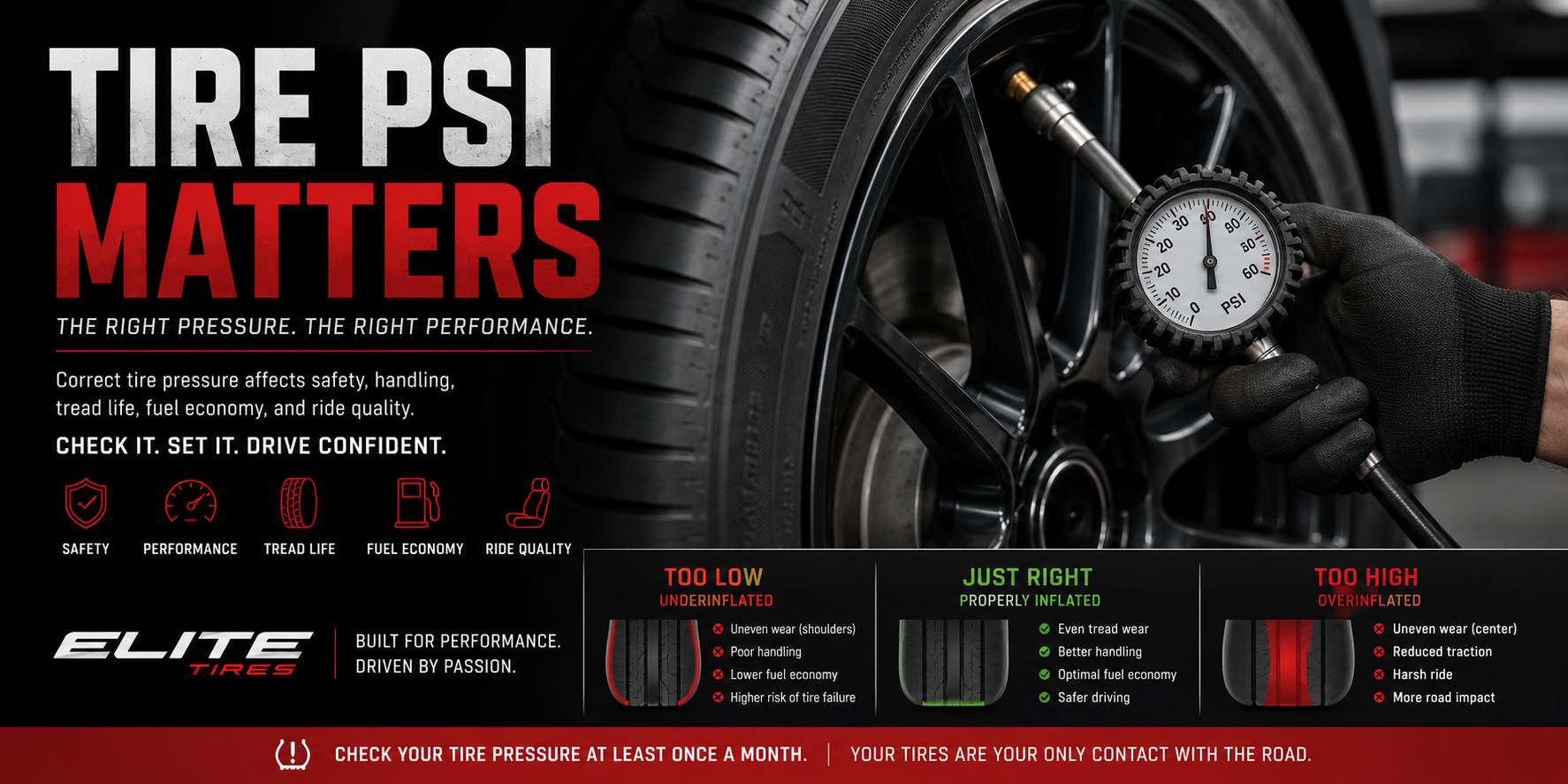
Tire pressure is one of the simplest maintenance items on a vehicle, but it is also one of the most important.
The correct PSI affects how the vehicle rides, handles, brakes, accelerates, wears tires, uses fuel, and responds in wet or emergency conditions. It also affects how much heat builds up inside the tire and how safely the tire carries the weight of the vehicle.
At Elite Tires, we believe tire performance is not only about brand, size, tread pattern, or compound. Even the best tire can perform poorly if it is not inflated correctly.
What Does PSI Mean?
PSI stands for pounds per square inch. It is the measurement commonly used in the United States to describe tire air pressure.
In simple terms, PSI tells you how much air pressure is inside the tire. That pressure supports the weight of the vehicle and helps the tire maintain its proper shape while driving.
Too little pressure and the tire flexes too much. Too much pressure and the tire may not contact the road the way it should. The goal is not to guess. The goal is to use the correct pressure for the vehicle and tire setup.
Where to Find the Correct Tire Pressure
The correct tire pressure for most vehicles is listed on the tire information placard, usually found inside the driver’s door jamb. It may also be listed in the owner’s manual.
This number is based on the vehicle manufacturer’s recommendation for the original tire size and vehicle load conditions.
One common mistake is using the number printed on the tire sidewall as the normal inflation pressure. The number on the sidewall is usually the tire’s maximum pressure rating, not the recommended daily driving pressure for the vehicle.
For normal use, start with the vehicle’s recommended PSI unless the tire size, load, towing setup, or aftermarket changes require a more specific adjustment.
Check Tire Pressure When Tires Are Cold
Tire pressure should be checked when the tires are cold. That means the vehicle has been parked for several hours or has only been driven a short distance at low speed.
As tires heat up from driving, the air inside expands and the pressure reading rises. If you check pressure right after driving, the reading may be higher than the true cold pressure.
For the most accurate reading, check tire pressure before a long drive, before the day heats up, or after the vehicle has been sitting.
Why Correct Tire Pressure Matters
Correct tire pressure helps the tire maintain the right shape and contact patch. The contact patch is the part of the tire that touches the road.
That small area is responsible for acceleration, braking, steering, cornering, and stability. If the tire pressure is wrong, the contact patch changes, and the vehicle may not behave the way it should.
Correct PSI helps the tire work as designed. It supports safer driving, better tire life, more predictable handling, and more consistent performance.
What Happens When Tires Are Underinflated?
Underinflation means the tire does not have enough air pressure. This is one of the most common tire pressure problems.
When a tire is underinflated, the sidewall flexes more than it should. That extra flex creates heat. Heat is one of the biggest enemies of tire durability.
Underinflated tires can also feel sluggish, reduce steering response, increase rolling resistance, lower fuel economy, and wear out faster on the outer edges of the tread.
In severe cases, underinflation can increase the risk of tire failure.
Underinflation and Tire Wear
A tire with low pressure often wears more heavily on the outer shoulders. This happens because the center of the tread may not carry the load evenly, while the outer edges take more stress.
If you notice both outer edges wearing faster than the middle, low tire pressure may be part of the problem.
However, tire wear can also be affected by alignment, suspension, driving style, rotation habits, and load. Pressure is one important piece of the tire wear puzzle.
Underinflation and Fuel Economy
Low tire pressure increases rolling resistance. That means the vehicle has to work harder to move down the road.
When rolling resistance increases, fuel economy can drop. For gas, diesel, hybrid, and electric vehicles, correct tire pressure helps the vehicle roll more efficiently.
For EVs, tire pressure can also affect driving range. A tire that is too low can make the vehicle use more energy than necessary.
Underinflation and Heat Buildup
Heat buildup is one of the most serious effects of low tire pressure.
As an underinflated tire flexes more, it generates more heat. Long highway drives, heavy loads, towing, hot weather, or high speeds can make the problem worse.
This is why tire pressure should be taken seriously before road trips, towing, summer driving, and heavy hauling.
What Happens When Tires Are Overinflated?
Overinflation means the tire has too much air pressure.
An overinflated tire can become too stiff. This may reduce ride comfort, make the vehicle feel harsher over bumps, and reduce the tire’s ability to absorb road imperfections.
Overinflation can also reduce the size of the contact patch. In some situations, that can hurt traction, braking performance, and wet-weather confidence.
Overinflation and Center Wear
Overinflated tires may wear faster in the center of the tread. This happens when the middle of the tire carries more load than the outer edges.
If the center tread is wearing faster than the shoulders, too much pressure may be part of the problem.
Like all tire wear issues, it should be checked alongside alignment, rotation history, suspension condition, and driving habits.
Overinflation and Ride Quality
Too much tire pressure can make the vehicle ride harshly. Bumps, cracks, potholes, and rough pavement may feel sharper inside the cabin.
For daily drivers, trucks, SUVs, and family vehicles, overinflation can make the vehicle feel less comfortable and less controlled.
The right pressure helps the tire absorb small road impacts while still supporting the vehicle correctly.
How Tire Pressure Affects Handling
Tire pressure changes the way a vehicle responds to steering input.
Low pressure can make the vehicle feel slow to respond, heavy, or unstable. High pressure can make the tire feel stiff, nervous, or less planted depending on the vehicle and tire.
Correct tire pressure helps the vehicle feel balanced and predictable. For performance cars, this can make a noticeable difference in steering feel, cornering confidence, and braking response.
How Tire Pressure Affects Braking
Braking depends on the tire’s contact with the road. If tire pressure is too low or too high, the contact patch may not work as intended.
Correct pressure helps the tire maintain better road contact during braking. This is especially important in wet weather, emergency stops, heavy traffic, and performance driving.
Good brakes still need good tires, and good tires still need correct pressure.
How Tire Pressure Affects Wet Traction
Wet traction depends on tread design, tread depth, tire compound, and proper tire pressure.
If pressure is too low, the tire may not channel water correctly and may feel less stable. If pressure is too high, the contact patch may shrink and reduce grip.
In rain, tire pressure becomes even more important because the tire has to maintain contact with the road while clearing water from the tread.
Tire Pressure and Hydroplaning
Hydroplaning happens when the tire rides on top of water instead of maintaining contact with the road.
Tread depth and speed are major factors, but tire pressure also plays a role. A tire that is underinflated may not maintain its intended shape and may be less effective at pushing water away.
Correct pressure helps the tread work as designed in wet conditions.
Tire Pressure and Tread Life
Proper inflation helps the tire wear more evenly. Even wear means the tire can last longer and perform more consistently throughout its life.
Incorrect pressure can shorten tire life by creating uneven wear patterns. Low pressure can wear the shoulders. High pressure can wear the center. Both can waste money and reduce performance.
For anyone investing in quality tires, pressure maintenance is one of the easiest ways to protect that investment.
Tire Pressure and Tire Rotation
Tire pressure and tire rotation work together. Rotation helps spread wear more evenly across the tire set, while correct pressure helps each tire wear properly in its position.
If tires are rotated regularly but pressure is ignored, uneven wear can still happen.
A good maintenance routine should include checking pressure, inspecting tread, and rotating tires at the proper interval.
Tire Pressure and Temperature Changes
Tire pressure changes with temperature. When temperatures drop, tire pressure usually drops. When temperatures rise, tire pressure usually rises.
This is why tire pressure warnings often appear during the first cold days of the season.
Drivers should check tire pressure when seasons change, especially when moving from warm weather into colder months.
Do Not Ignore the TPMS Light
Many modern vehicles have a Tire Pressure Monitoring System, often called TPMS. This system warns the driver when one or more tires are significantly underinflated.
TPMS is helpful, but it should not replace regular pressure checks. In many vehicles, the warning light may not turn on until the tire is already well below the recommended pressure.
The better habit is to check pressure regularly instead of waiting for the light.
How Often Should Tire Pressure Be Checked?
As a general habit, tire pressure should be checked at least once a month and before long trips.
It should also be checked before towing, hauling heavy loads, off-road driving, track use, or seasonal temperature changes.
Vehicles that sit for long periods should also be checked before being driven, because tires can lose pressure over time even when the vehicle is parked.
Tire Pressure for Trucks and SUVs
Trucks and SUVs often need extra attention because they may tow, haul, carry passengers, run larger tires, or use light truck tires with different load requirements.
If the vehicle is loaded heavily or towing, pressure requirements may change depending on the vehicle, tire, and load. The owner’s manual or tire information should be checked carefully.
Do not assume that the same pressure works for every truck setup. A stock SUV, lifted truck, towing rig, and overland build may all have different needs.
Tire Pressure for Off-Road Driving
Off-road drivers sometimes air down their tires to improve traction and comfort on sand, rocks, snow, or rough trails.
Airing down can increase the contact patch and help the tire conform to the terrain. However, it should be done carefully and with the right equipment.
After airing down, the tires should be aired back up before returning to normal road speeds. Driving on the highway with trail pressure can be unsafe and can damage the tire.
Tire Pressure for Performance Driving
Performance driving places extra demands on tires. Heat, cornering, braking, and speed can change tire pressure during a drive or track session.
Drivers who use their vehicles aggressively may monitor pressure more closely because tire pressure affects grip, balance, and tire wear.
For street use, the vehicle’s recommended pressure is usually the best starting point. Track or competition use may require a more specific pressure strategy based on the tire, vehicle, and conditions.
Tire Pressure for EVs
Electric vehicles often weigh more than similar gas vehicles and can produce instant torque. That makes tire pressure especially important.
Incorrect pressure can affect range, ride comfort, tread life, and traction. Low pressure can reduce efficiency, while incorrect pressure can accelerate wear under the extra weight and torque of the vehicle.
EV owners should check tire pressure regularly and make sure replacement tires match the vehicle’s load and performance requirements.
Do Bigger Tires Need Different PSI?
When changing tire size, the correct pressure may not always be the same as the original tire setup.
Larger tires, wider tires, light truck tires, and off-road tires may require different pressure depending on load capacity, vehicle weight, and use.
This is especially important for trucks, Jeeps, SUVs, and modified vehicles. A tire that is larger or built differently may not perform best at the same pressure as the factory tire.
Why the Sidewall Number Is Not the Daily PSI
The pressure listed on the tire sidewall is usually the maximum pressure the tire is rated for under maximum load conditions. It is not usually the recommended daily driving pressure for the vehicle.
Using the sidewall maximum as your normal PSI can lead to overinflation, harsh ride quality, uneven wear, and reduced traction.
Always check the vehicle’s recommended pressure first, then adjust only when the tire setup, load, or use case requires it.
Common Tire Pressure Mistakes
Many tire pressure problems come from simple habits that are easy to fix.
- Only checking pressure when the TPMS light comes on
- Using the sidewall maximum as the normal PSI
- Checking pressure after a long drive instead of when cold
- Ignoring seasonal temperature changes
- Forgetting the spare tire
- Running the same pressure after changing tire size
- Not adjusting for towing or heavy loads when needed
- Driving on road at off-road aired-down pressure
Build Better Tire Habits
Correct tire pressure is one of the easiest ways to improve safety, tire life, ride quality, and performance.
It does not require expensive parts or complicated tools. It just requires a good pressure gauge, a few minutes of attention, and the habit of checking regularly.
At Elite Tires, we help drivers choose the right tires and understand how to get the best performance from them. Whether you drive a daily commuter, truck, SUV, performance car, off-road build, or EV, correct PSI matters.
Ready to get more from your tires? Explore tire options, fitment guidance, and tire maintenance essentials at Elite Tires.