WARN Winches and Recovery Gear: Build Your Off-Road Rig for the Unexpected
WARN winches and recovery gear help off-road drivers prepare for mud, rocks, snow, sand, and remote trails. Learn why a proper winch setup, recovery points, straps, shackles, and trail gear matter before your build gets stuck.
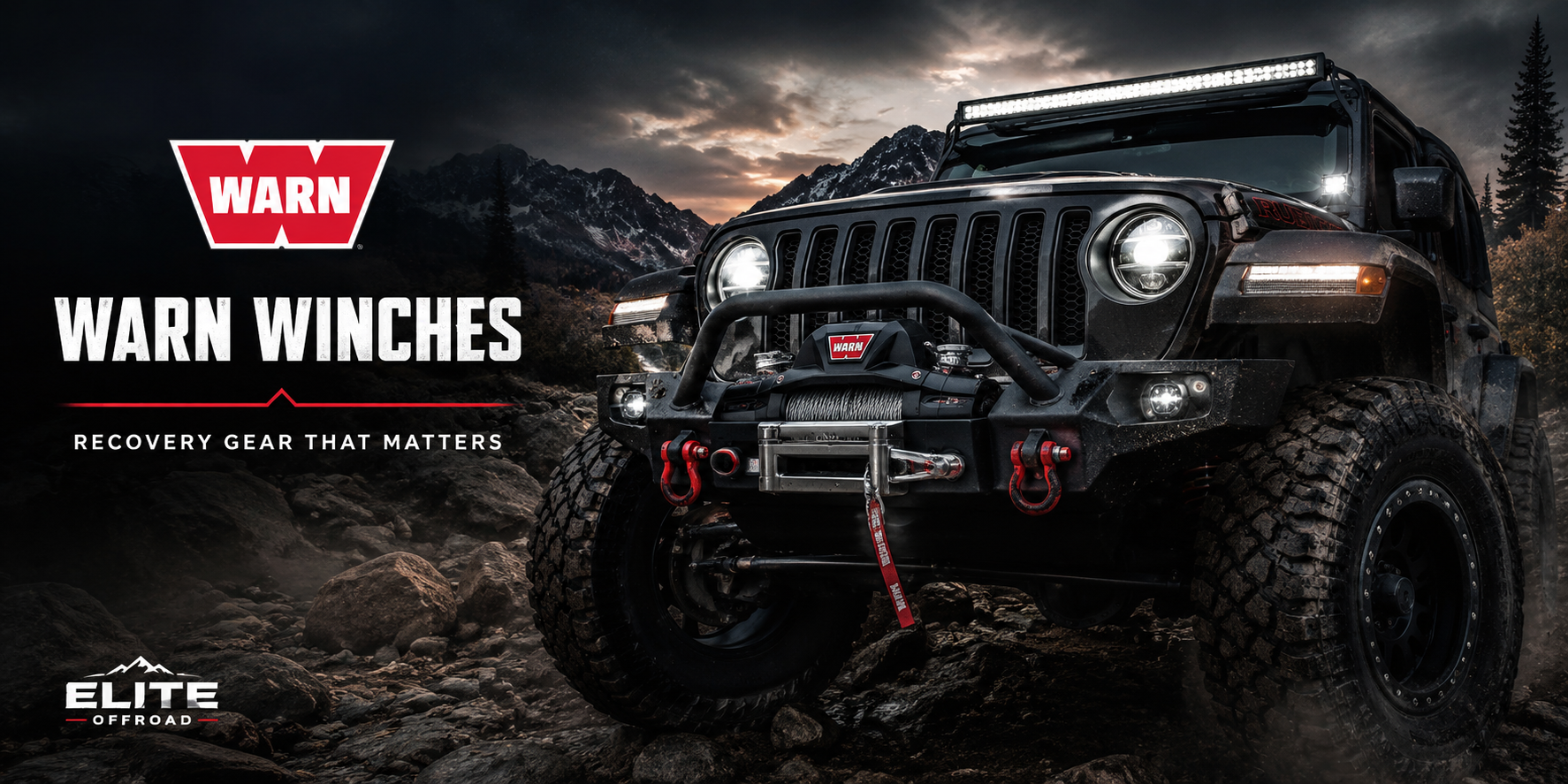
Off-road builds are usually judged by the parts people can see first. Bigger tires, lift kits, wheels, bumpers, lights, and suspension upgrades all change the way a truck, Jeep, SUV, or UTV looks.
But the trail does not care how good the build looks when it gets stuck.
That is why recovery gear matters.
WARN is one of the most recognized names in off-road recovery, especially when it comes to winches, recovery equipment, and trail-ready accessories. For drivers who spend time in mud, rocks, snow, sand, remote trails, or steep terrain, a proper recovery setup can make the difference between a small delay and a serious problem.
At Elite Offroad, we focus on upgrades that serve a real purpose. WARN fits that mindset because recovery gear is not just an accessory. It is part of building a vehicle that is prepared for real use.
Why Recovery Gear Should Be Part of the Build
Getting stuck is part of off-roading. It can happen to a stock SUV, a built Jeep, a lifted truck, or a side-by-side. Even experienced drivers can get caught in soft sand, deep mud, snow, loose rocks, or a bad trail line.
The difference is whether the vehicle is prepared when it happens.
Recovery gear gives you options. It helps you recover your own vehicle, assist another driver, or safely get out of a difficult situation without relying completely on luck. A good recovery setup gives the driver more confidence because the vehicle is not only built to go farther, but also built to get back.
What Makes WARN a Strong Choice?
WARN has a long-standing reputation in the off-road world because the brand is closely tied to real recovery use. Winches and recovery gear need to work when the situation is already stressful. That means durability, pulling power, proper mounting, and reliable operation matter.
A recovery product is not the place to cut corners. When a vehicle is stuck, loaded, or positioned at a difficult angle, the gear is under serious force. Cheap or poorly matched equipment can create damage, delay, or dangerous recovery situations.
WARN is a strong option for drivers who want recovery equipment that feels like a serious part of the build, not just something added for looks.
Why a Winch Is One of the Most Important Off-Road Upgrades
A winch gives the vehicle a way to pull itself out when traction runs out. This is especially valuable when another vehicle is not available or when the trail situation makes a strap recovery difficult.
For off-road trucks, Jeeps, SUVs, and UTVs, a winch can be useful in mud, snow, rocks, steep climbs, washed-out trails, and remote areas. It can help pull the vehicle forward, stabilize it during a difficult recovery, or assist another driver when conditions get rough.
A winch does not make a vehicle unstoppable, but it does make the build more prepared.
Choosing the Right Winch Capacity
Winch capacity should match the vehicle. A lightweight UTV does not need the same winch as a full-size truck. A Jeep Wrangler has different recovery needs than a heavy diesel truck with bumpers, armor, gear, and larger tires.
As a general rule, many off-road drivers look for a winch rated higher than the vehicle’s weight. This gives the winch more working margin when the vehicle is stuck in mud, pulled uphill, or loaded with gear.
Choosing the right capacity is important because recovery forces can be much higher than the vehicle’s actual weight. Mud suction, incline, resistance, and poor traction all increase the load.
Synthetic Rope vs Steel Cable
One of the biggest decisions when choosing a winch is synthetic rope versus steel cable.
Synthetic rope is popular because it is lighter, easier to handle, and safer in many recovery situations when used correctly. It is also easier to work with on the trail and does not store the same kind of energy as steel cable.
Steel cable is known for durability against abrasion and heat, but it is heavier and can be harder to handle. It also requires careful use because damaged or tensioned steel cable can be dangerous.
The best choice depends on the vehicle, terrain, budget, maintenance habits, and how the winch will be used. Both options require proper care and safe recovery practices.
Winch Mounting Matters
A winch is only as useful as the mount holding it. The winch must be installed on a bumper, mount, or plate designed to handle recovery loads.
Not every bumper is winch-ready. Some bumpers are designed mainly for appearance, while others are built to support serious recovery use. If the winch mount is weak, poorly installed, or not compatible with the vehicle, the recovery setup may not be safe.
For a complete build, the winch, bumper, mounting plate, fairlead, wiring, and recovery points should all work together.
Recovery Points Are Critical
A winch setup should be paired with proper recovery points. Factory tie-down points are not always the same as recovery points, and using the wrong attachment location can damage the vehicle or create a dangerous situation.
Frame-mounted recovery points, recovery hooks, D-ring mounts, and hitch recovery points are common options depending on the vehicle. The key is using points that are designed for recovery loads.
Recovery gear should never be attached to suspension parts, steering components, bumpers not designed for recovery, or random underbody locations.
Fairleads and Winch Accessories
A winch system includes more than the winch itself. Fairleads, hooks, thimbles, shackles, straps, and gloves all play a role in how the system works.
A fairlead helps guide the winch line during recovery. Hawse fairleads are commonly used with synthetic rope, while roller fairleads are often associated with steel cable setups. The right fairlead depends on the winch line and setup.
Accessories may seem small, but they complete the recovery system. A winch without the right supporting gear is not as useful as it should be.
Recovery Straps and Shackles
Even with a winch, recovery straps and shackles should still be part of the trail kit. Not every recovery situation requires a winch, and sometimes a strap recovery with another vehicle is the fastest and simplest solution.
Recovery straps should be properly rated for the vehicle and used correctly. Shackles should also be rated and compatible with the recovery points and straps being used.
Soft shackles are popular because they are lightweight and easy to store. Traditional D-ring shackles are strong and widely used, but they need to be handled carefully because metal recovery gear can become dangerous if something fails.
Tree Savers and Responsible Recovery
A tree saver strap is an important part of a winch kit when trees are used as anchor points. It helps protect the tree and also protects the winch line.
Wrapping a winch line directly around a tree can damage the tree and damage the line. A tree saver gives you a better way to anchor the recovery while reducing trail impact.
Responsible recovery matters. The goal is to get unstuck without damaging the vehicle, the trail, or the environment.
Gloves and Recovery Safety
Recovery situations involve tension, heavy equipment, mud, sharp edges, and unpredictable movement. Gloves are a simple but important part of the kit.
They help protect your hands when handling winch line, shackles, straps, hooks, and muddy equipment. They also make it easier to work safely when conditions are wet, cold, or dirty.
Recovery gear should be treated with respect. A safe recovery is planned, controlled, and never rushed.
WARN for Trucks and Jeeps
Trucks and Jeeps are natural fits for WARN recovery gear. A Jeep Wrangler or Gladiator used on rocks, trails, or mud can benefit from a front winch setup and recovery accessories. A truck used for overlanding, hunting, work, or remote trails can also benefit from winch capability.
Full-size trucks may need higher-capacity winches and stronger supporting components because of their weight. Jeeps may benefit from compact, trail-focused setups that integrate cleanly into off-road bumpers.
The best setup depends on how the vehicle is used, where it goes, and how much weight it carries.
WARN for UTVs and Side-by-Sides
UTVs and side-by-sides can get stuck just like larger vehicles. Mud holes, steep trails, snow, sand, and ruts can stop a machine quickly.
A UTV winch is especially useful because these vehicles are often used far from paved roads and may not have another vehicle nearby. Compact winches, soft shackles, straps, and lightweight recovery gear can make a UTV much more prepared for trail use.
Because space and weight matter on a UTV, the recovery setup should be compact, organized, and easy to access.
Do Not Wait Until You Need It
The worst time to think about recovery gear is after the vehicle is already stuck. By then, the situation is harder, dirtier, and more stressful.
Recovery gear should be part of the build before the first serious trail day. A winch, recovery points, straps, shackles, gloves, and basic tools can help prevent a small problem from becoming a major issue.
Even if the gear is not used often, having it available gives the driver more confidence and more options.
Pairing Recovery Gear With Other Off-Road Upgrades
WARN recovery gear works best as part of a complete off-road setup. Tires, suspension, bumpers, skid plates, lighting, and recovery equipment all support different parts of trail performance.
For example, larger all-terrain or mud-terrain tires improve traction. Suspension helps control the vehicle. Skid plates protect vulnerable components. Lighting improves visibility. A winch and recovery gear help when traction runs out anyway.
The best off-road builds are prepared from multiple angles.
Who Should Consider WARN?
WARN is a strong choice for drivers who want recovery gear that supports real off-road use.
You should consider WARN if you want:
- A serious winch setup for your truck, Jeep, SUV, or UTV
- Better trail preparation before remote trips
- Recovery gear for mud, snow, sand, rocks, or steep terrain
- A winch paired with proper recovery accessories
- More confidence when exploring difficult trails
- Recovery equipment that supports a complete off-road build
- A practical upgrade that improves safety and preparedness
Build for the Trail, Not Just the Parking Lot
A true off-road build should be prepared for more than appearance. It should be ready for real terrain, changing conditions, and unexpected situations.
WARN winches and recovery gear help drivers build that kind of confidence. Whether you drive a Jeep, Tacoma, 4Runner, Bronco, F-150, Ram, Silverado, full-size SUV, or UTV, the right recovery setup can make your build more complete.
At Elite Offroad, we help drivers choose upgrades that match how the vehicle is actually used. If your build is ready for trails, travel, work, or adventure, recovery gear should be part of the plan.
Ready to prepare your build for the unexpected? Explore WARN winches, recovery gear, and off-road accessories at Elite Offroad.