Wheel Offset and Backspacing Explained: Get It Right the First Time
Offset and backspacing are the two most misunderstood specs in wheel fitment. Get them wrong and your new wheels won't clear your brakes, fenders, or suspension.
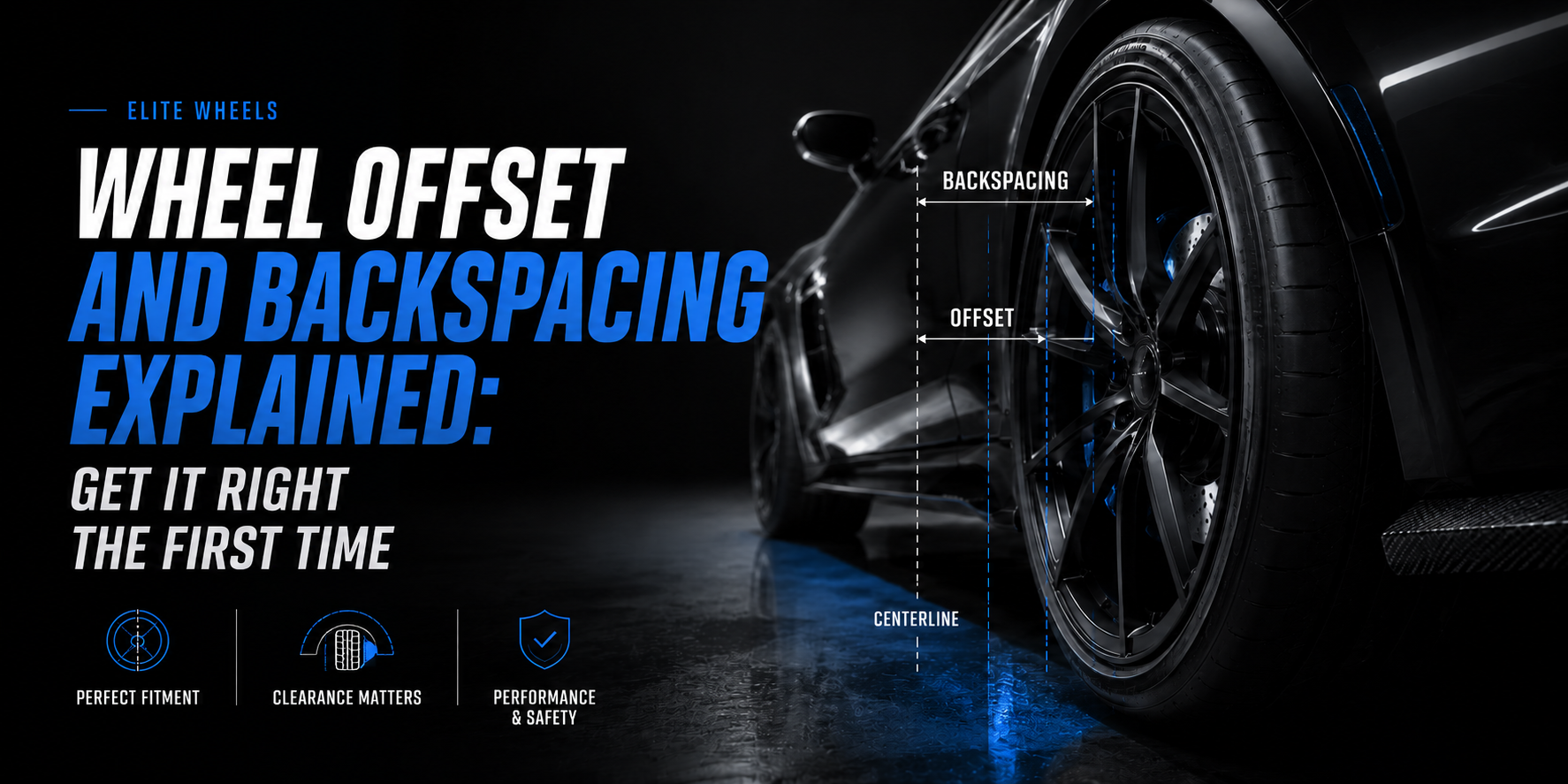
Nothing is more frustrating than ordering a set of wheels, waiting two weeks for them to arrive, and then finding out they rub your fender on turns or won't clear your brake calipers. Offset and backspacing are the numbers that prevent this — here's how they work.
What Is Offset?
Offset is the distance in millimeters between the wheel's hub mounting face (where it bolts to the vehicle) and the centerline of the wheel. It's stamped or cast into the back of every wheel, typically labeled "ET" followed by a number.
- Positive offset (+ET): The mounting face is toward the front (street side) of the wheel. The wheel sits more inboard, tucked into the fender. Common on front-wheel-drive cars and many stock truck applications.
- Zero offset (ET0): The mounting face is exactly at the wheel's centerline. Wheel sits evenly inside and outside the hub.
- Negative offset (-ET): The mounting face is toward the back (brake side) of the wheel. The wheel sticks outward. Produces the wide-stance, "poked" look common on lifted trucks and off-road builds.
What Is Backspacing?
Backspacing is the distance in inches from the wheel's mounting face to the back rim edge. It tells you how much clearance exists between the wheel and your suspension and braking components. Low backspacing means the wheel sticks out more. High backspacing means it sits deeper in the wheel well.
Backspacing and offset measure the same relationship from different reference points. They're mathematically related — if you know one and the wheel width, you can calculate the other. Most wheel manufacturers provide both specs.
Why This Matters for Fitment
Too much positive offset (high backspacing) and your wheel may contact the inner fender liner, suspension components, or brake caliper. Too much negative offset (low backspacing) and the wheel sticks outside the fender, which may be illegal in some states, causes accelerated wear on wheel bearings, and can create clearance issues with the outer fender on full suspension compression or turns.
For lifted trucks running larger tires, a slight negative offset is often necessary to clear the wider tires. A common approach for a 6" lifted half-ton with 35" tires is roughly a -12mm to -18mm offset with a wheel width of 9".
How to Find the Right Offset for Your Vehicle
The safest approach: start with your OEM offset as the baseline and understand what happens as you move in each direction. Your vehicle's factory offset is in the owner's manual, the door jamb sticker (sometimes), or easily searchable by year/make/model/trim. From there:
- Going wider than stock width: you'll likely need to reduce offset to keep the wheel in the same position relative to the hub
- Running a lift kit: the suspension geometry change often accommodates or requires a slightly different offset
- Running larger brakes: check caliper clearance carefully before ordering
Use a Fitment Calculator
Before purchasing, use a wheel fitment calculator or contact our fitment specialists. Plugging in your vehicle, tire size, and desired wheel specs can catch clearance conflicts before they become return shipping headaches.