Wheel Offset Explained: How It Changes Stance, Clearance, and Fitment
Wheel offset is one of the most important measurements when choosing aftermarket wheels. Learn how positive, negative, and zero offset affect stance, tire clearance, brake clearance, rubbing, and the way your vehicle looks and drives.
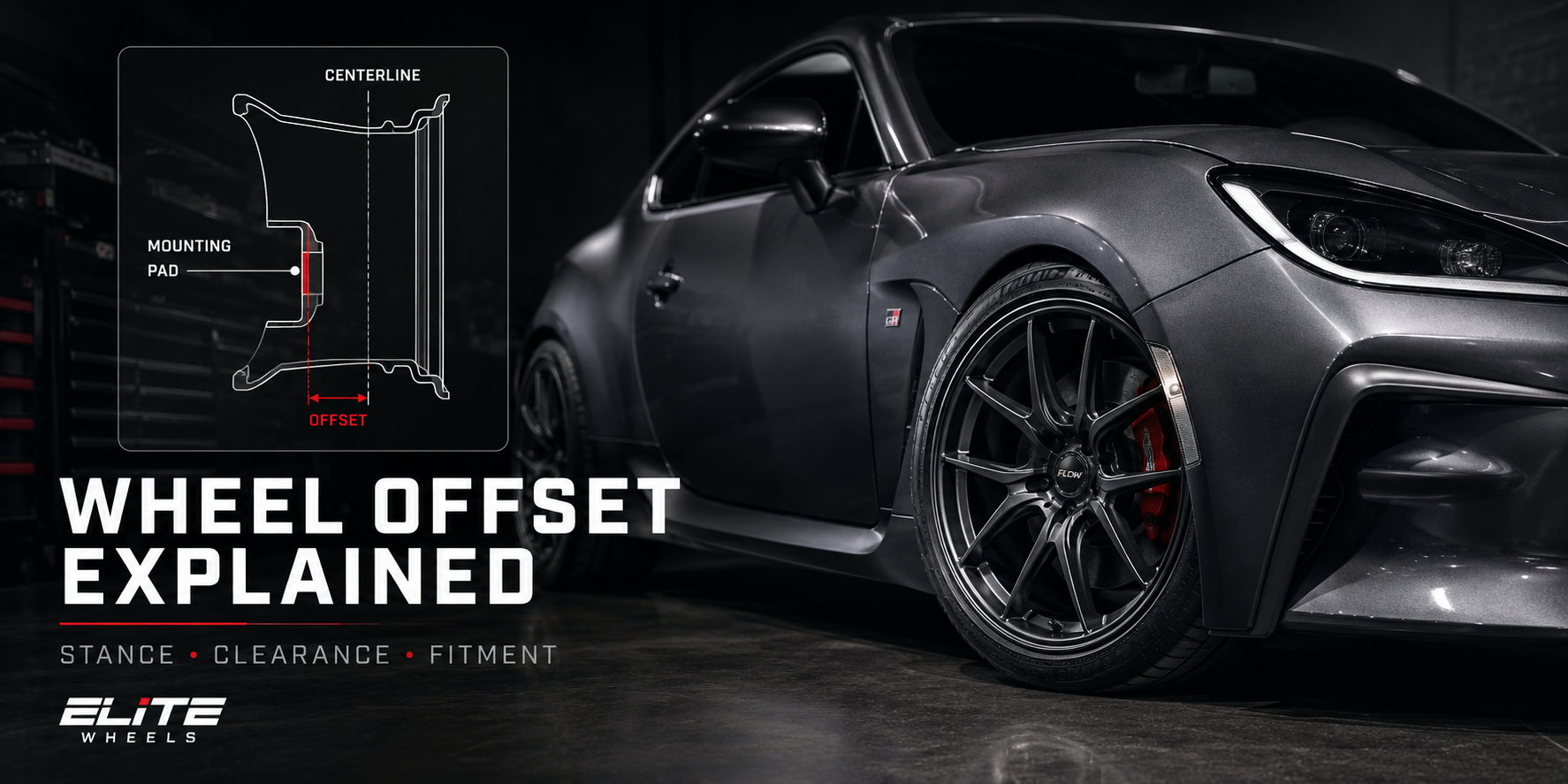
Wheel offset is one of the most important measurements in aftermarket wheel fitment, but it is also one of the easiest details to misunderstand.
Most people start by looking at wheel diameter, width, bolt pattern, and finish. Those details matter, but offset is what helps determine where the wheel actually sits on the vehicle.
The right offset can make a vehicle look clean, aggressive, balanced, and properly fitted. The wrong offset can cause rubbing, poor clearance, steering issues, awkward stance, or a wheel setup that simply does not look right.
At Elite Wheels, we focus on complete fitment. That means wheel size, width, offset, tire size, suspension setup, brake clearance, and vehicle use all need to work together.
What Is Wheel Offset?
Wheel offset is the distance between the wheel’s mounting surface and the centerline of the wheel. It is usually measured in millimeters.
The mounting surface is the part of the wheel that sits against the vehicle’s hub. The centerline is the exact middle of the wheel’s width.
Offset determines whether the wheel sits farther inward toward the suspension, farther outward toward the fender, or more centered in the wheel well.
Positive Offset
Positive offset means the wheel’s mounting surface is closer to the outside face of the wheel. This pulls the wheel inward toward the suspension.
Many modern cars, crossovers, SUVs, and factory wheel setups use positive offset. A higher positive offset usually creates a more tucked appearance.
Positive offset can help keep the wheel inside the fender, but too much positive offset may cause the wheel or tire to sit too close to suspension components, inner fender liners, or brake parts.
Negative Offset
Negative offset means the wheel’s mounting surface is closer to the inside of the wheel. This pushes the wheel outward away from the vehicle.
Negative offset is common on aggressive truck, Jeep, and off-road wheel setups. It can create a wider stance and a more rugged appearance.
The tradeoff is that too much negative offset can cause tire poke, fender rubbing, extra road spray, increased stress on components, and a more aggressive steering feel.
Zero Offset
Zero offset means the wheel’s mounting surface is directly in line with the centerline of the wheel.
This can work well on certain vehicles and wheel setups, but like any offset, it depends on the vehicle, wheel width, tire size, and suspension clearance.
Zero offset is not automatically good or bad. It is simply one position in the fitment equation.
Offset Changes the Way a Vehicle Looks
Offset has a major impact on stance. Two wheels can have the same diameter and width but look completely different if the offset is different.
A higher offset may make the wheel look tucked inside the fender. A lower offset may bring the wheel closer to flush. A very low or negative offset may push the wheel outside the fender for a more aggressive look.
This is why offset is one of the biggest factors in achieving the fitment style you want.
Flush Fitment
Flush fitment means the wheel and tire sit close to even with the fender. This is a popular look because it gives the vehicle a clean, finished stance without looking too tucked or too aggressive.
Flush fitment requires the right balance of wheel width, offset, tire size, and suspension height.
If the offset is too high, the wheels may look sunken. If the offset is too low, the tires may stick out too far or rub the fenders.
Tucked Fitment
Tucked fitment means the wheel and tire sit farther inside the fender. Some factory vehicles are designed this way for clearance, comfort, and practicality.
A tucked setup may be useful for daily driving, winter tire setups, or vehicles that need maximum fender clearance.
However, too much tuck can make aftermarket wheels look less aggressive and may not give the visual impact many drivers want from a wheel upgrade.
Aggressive Fitment
Aggressive fitment usually means the wheel sits wider, closer to the fender, or even slightly outside the fender line.
This look is common on trucks, off-road builds, widebody cars, and certain performance setups. It can make the vehicle look wider, lower, tougher, and more custom.
The downside is that aggressive fitment needs careful planning. Tire size, suspension travel, fender clearance, alignment, and local road use all matter.
Offset and Wheel Width Work Together
Offset cannot be judged by itself. Wheel width changes everything.
A 9-inch wide wheel with a +20 offset will not sit the same as a 10.5-inch wide wheel with a +20 offset. Even though the offset number is the same, the wider wheel extends farther inward and outward.
This is why wheel fitment needs to consider both width and offset together. Looking at only one number can be misleading.
Offset and Tire Size
Tire size also affects fitment. A wider tire or taller tire can create rubbing even if the wheel offset looks correct on paper.
For example, a wheel may clear perfectly with a narrow tire but rub with a wider tire. A truck may clear a certain wheel setup with a smaller tire but rub once a larger all-terrain or mud-terrain tire is installed.
The tire is part of the fitment package. Wheel offset should always be chosen with the intended tire size in mind.
Offset and Brake Clearance
Brake clearance is another major factor. A wheel needs to clear the brake calipers, rotors, and any upgraded brake components.
Offset can affect where the wheel sits, but spoke design also matters. Two wheels with the same size and offset can have different brake clearance because the spoke shape is different.
This is especially important for performance cars, big brake kits, trucks with larger brake packages, and luxury vehicles with large calipers.
Offset and Suspension Clearance
The inner side of the wheel and tire needs to clear suspension components. This includes control arms, struts, coilovers, sway bars, and inner liners.
Too much positive offset can pull the wheel inward and reduce inner clearance. This can cause rubbing on suspension parts or inner fender areas.
Too much negative offset pushes the wheel outward, which may improve inner clearance but create outer fender problems.
Offset and Fender Clearance
Outer clearance is just as important as inner clearance. If the wheel sits too far out, the tire may rub the fender, bumper, mud flap, or body mount.
This is especially common on trucks and SUVs running larger tires. A more aggressive offset can look great, but it may also create rubbing during turns, compression, or off-road articulation.
The right fitment needs to account for how the vehicle moves, not just how it looks while parked.
Offset on Trucks and SUVs
Trucks and SUVs often use lower offsets to create a wider, more aggressive stance. This is common on lifted trucks, off-road builds, and vehicles running wider all-terrain or mud-terrain tires.
A lower offset can help the vehicle look stronger and may create more inner clearance for wider tires. However, it can also increase tire poke and rubbing at the outer fender or bumper.
For trucks, the best offset depends on lift height, tire size, wheel width, suspension setup, and how much poke the driver wants.
Offset on Performance Cars
Performance cars usually need a more precise approach. The goal may be flush fitment, wider tires, better grip, or improved brake clearance.
Offset can change steering feel, tire clearance, and how the vehicle behaves under load. A setup that looks good parked may rub during hard cornering or suspension compression if it is not planned correctly.
For performance builds, fitment should be chosen around driving use, not just appearance.
Offset on Daily Drivers
Daily drivers need fitment that looks good without creating constant problems. Too much poke can throw road debris onto the body. Too little clearance can cause rubbing. Too aggressive of a setup can make normal driving frustrating.
For daily use, a clean and functional offset is usually better than chasing the most aggressive look possible.
The best daily driver wheel setup should improve style while keeping the vehicle comfortable, reliable, and easy to live with.
Wheel Spacers and Effective Offset
Wheel spacers change effective offset by moving the wheel outward.
For example, if a wheel has a +35 offset and you add a 10 mm spacer, the effective offset becomes closer to +25. This can help improve stance or clearance, but it also needs proper hardware and installation.
Spacers can be useful for fine-tuning fitment, but they should not be used to fix a wheel that is completely wrong for the vehicle.
Common Offset Mistakes
Many wheel fitment problems happen because offset is misunderstood or ignored.
- Choosing wheels only by diameter and bolt pattern
- Ignoring wheel width when comparing offset
- Buying an aggressive offset without checking fender clearance
- Assuming truck fitment works the same on every lift height
- Forgetting brake clearance
- Ignoring tire size and sidewall shape
- Using spacers instead of choosing the right wheel spec
- Copying another build without confirming vehicle details
How to Choose the Right Offset
The right offset depends on the full setup. Before choosing wheels, consider the vehicle, wheel width, tire size, suspension height, brake clearance, desired stance, and how the vehicle is used.
A show car, daily driver, lifted truck, track car, and off-road SUV may all need different fitment priorities.
The goal is to choose a wheel that looks right, clears correctly, and supports the way the vehicle actually drives.
Build Fitment With Purpose
Wheel offset is one of the most important parts of aftermarket wheel fitment. It affects stance, clearance, rubbing, brake fitment, and the overall look of the vehicle.
The best wheel setup is not always the most aggressive one. It is the one that matches the vehicle, tire size, suspension, and driver’s goals.
At Elite Wheels, we help drivers choose wheel setups with the full picture in mind. That means offset, width, bolt pattern, hub bore, tire pairing, hardware, and real-world fitment all matter.
Ready to dial in your stance? Explore aftermarket wheels, fitment accessories, and wheel options at Elite Wheels.