Wheel Spacers Explained: When They Help Fitment and When They Cause Problems
Wheel spacers can improve stance, brake clearance, and wheel fitment, but they need to be chosen and installed correctly. Learn when spacers make sense, what hub-centric spacers do, and what mistakes to avoid.
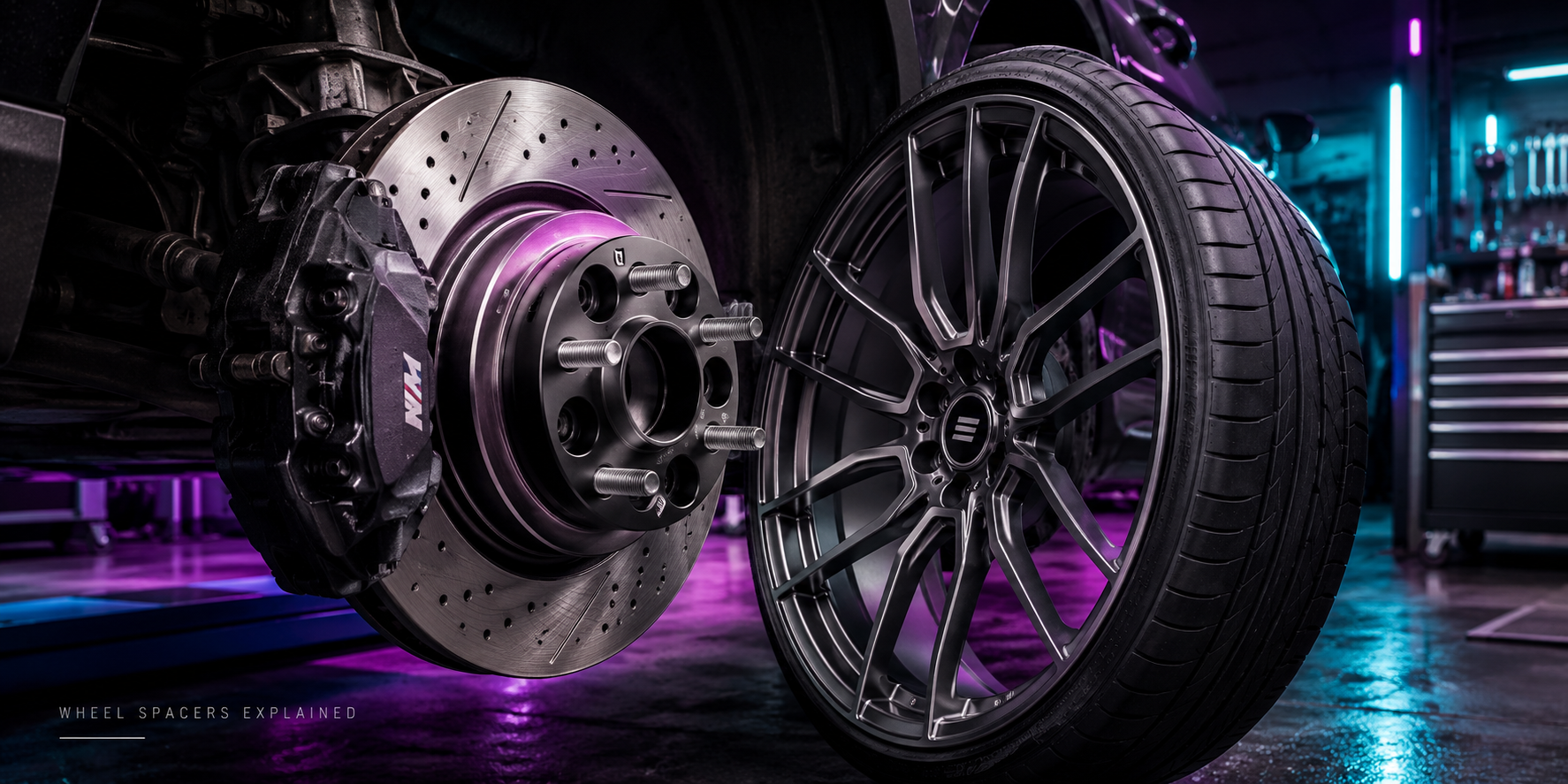
Wheel fitment can completely change the look of a vehicle. The same wheels can look tucked, flush, aggressive, or completely wrong depending on offset, width, tire size, suspension setup, and how the wheel sits in the fender.
That is why wheel spacers are such a common topic in the aftermarket wheel world.
Wheel spacers can help push the wheel outward, improve stance, create extra clearance, or fine-tune a setup that is almost perfect. But they are not something to install casually. The wrong spacer, poor hardware, or careless installation can create vibration, rubbing, damaged studs, or unsafe fitment.
At Elite Wheels, we focus on complete wheel fitment. That means the wheels, tires, offset, hub bore, lug hardware, torque, and spacers all need to work together. Wheel spacers can be useful, but only when they are chosen with purpose.
What Are Wheel Spacers?
A wheel spacer is a metal disc that installs between the vehicle hub and the wheel. Its job is to move the wheel farther away from the hub.
By pushing the wheel outward, a spacer changes the effective offset of the wheel. This can improve appearance, create more clearance, or help the wheel sit more evenly with the fender.
Wheel spacers come in different thicknesses, bolt patterns, hub bore sizes, and designs. Some are simple slip-on spacers, while others are bolt-on spacers with their own studs.
Why Drivers Use Wheel Spacers
Drivers use wheel spacers for several reasons. Some want a more aggressive stance. Some need extra clearance for brake calipers. Others are trying to correct a wheel setup that sits too far inward.
On trucks and SUVs, spacers are often used to help larger tires clear suspension components or to create a wider stance after a lift. On performance cars, spacers may be used to fine-tune fitment or clear larger brake kits. On show builds, they can help create a more flush look.
The key is knowing the goal before choosing the spacer.
Wheel Spacers and Offset
Wheel spacers change effective offset.
Offset is the distance between the wheel’s mounting surface and the centerline of the wheel. A lower offset pushes the wheel outward. A higher offset pulls the wheel inward.
When you add a spacer, you are effectively lowering the offset of the wheel. For example, if a wheel has a +35 offset and you add a 10 mm spacer, the effective offset becomes closer to +25.
This is why spacers can dramatically change how a wheel sits on the vehicle.
Using Spacers for Better Stance
One of the most common reasons people install wheel spacers is stance. If the wheels sit too far inside the fenders, the vehicle can look narrow or unfinished.
A properly sized spacer can help bring the wheel closer to flush with the fender, giving the vehicle a stronger and more complete appearance.
This is especially noticeable on cars, trucks, and SUVs with wide fenders, aftermarket suspension, or factory wheels that sit too tucked from the factory.
Using Spacers for Brake Clearance
Wheel spacers can also help with brake clearance. Some aftermarket wheels may clear the brake rotor but not the face of the brake caliper. A small spacer can move the wheel outward enough to create the clearance needed.
This is common when upgrading to larger brakes, big brake kits, or wheels with spoke designs that sit close to the caliper.
Brake clearance should always be checked carefully. A spacer may solve the problem, but the final setup still needs proper lug engagement, safe fitment, and enough room between the tire and fender.
Using Spacers for Larger Tires
Trucks, Jeeps, and SUVs often use spacers when installing larger tires. A wider or taller tire may rub control arms, suspension components, sway bars, or inner fender areas.
Moving the wheel outward can sometimes create extra inner clearance. However, it can also create new rubbing at the outer fender, bumper, mud flap, or body mount area.
This is why spacer fitment should be planned carefully. Fixing one clearance issue can create another if the full setup is not considered.
Slip-On Spacers
Slip-on spacers slide over the vehicle’s existing wheel studs before the wheel is installed. They are usually thinner than bolt-on spacers and rely on the factory studs to hold the wheel.
Thin slip-on spacers can be useful for minor clearance adjustments, but they require enough remaining thread engagement for the lug nuts. If the spacer is too thick and the studs are not long enough, the lug nuts may not have enough thread contact.
Thread engagement is critical. A spacer should never be used if it prevents the lug nuts from securing the wheel properly.
Bolt-On Spacers
Bolt-on spacers attach to the vehicle hub using their own lug nuts, and then the wheel attaches to studs built into the spacer.
These are commonly used when a thicker spacer is needed. They can be useful for trucks, Jeeps, SUVs, and certain fitment corrections.
However, bolt-on spacers need to be high quality, properly sized, and correctly torqued. Both the spacer-to-hub connection and the wheel-to-spacer connection matter.
Hub-Centric Spacers
Hub-centric spacers are designed to center on the vehicle hub and provide a hub lip for the wheel to center on.
This is important because proper centering helps reduce vibration. If a spacer is not hub-centric, the wheel may rely more heavily on the lug nuts for centering, which can increase the chance of vibration if the installation is not perfect.
For most modern vehicles and aftermarket wheel setups, hub-centric spacers are usually the better choice when spacers are needed.
Lug-Centric Spacers
Lug-centric spacers rely on the lug nuts to center the wheel. Some setups can work this way, but it requires careful installation and the correct hardware.
The risk is that the wheel may not center perfectly, especially if the spacer, wheel, or lug hardware is not designed well for the application.
If a vehicle develops vibration after installing spacers, hub centering should be one of the first things checked.
Spacer Thickness Matters
Spacer thickness should be chosen carefully. A small spacer can make a subtle change. A larger spacer can dramatically alter the vehicle’s stance and clearance.
Going too thick can push the wheels too far outward, causing tire poke, fender rubbing, increased road spray, or stress on wheel bearings and suspension components.
The right thickness depends on the wheel offset, tire size, suspension setup, fender clearance, brake clearance, and the look the driver wants.
Do Not Stack Wheel Spacers
Stacking multiple spacers is not a good practice. If a setup needs more spacing, it should use one properly sized spacer designed for the application.
Stacking spacers can reduce stability, create improper seating, and increase the risk of vibration or hardware issues.
A clean fitment solution should be planned correctly instead of pieced together with multiple layers.
Wheel Spacers and Lug Nut Engagement
Lug nut engagement is one of the most important safety details when using spacers.
The lug nuts need enough thread contact to properly secure the wheel. If a spacer reduces the amount of available stud length too much, the setup may not be safe.
This is especially important with slip-on spacers. If the vehicle needs a thicker spacer, extended studs or bolt-on spacers may be required depending on the setup.
Wheel Spacers and Torque
Proper torque is critical when installing spacers.
For bolt-on spacers, the spacer must be torqued to the hub correctly, and then the wheel must be torqued to the spacer correctly. Both connections matter.
After installation, torque should be re-checked after a short driving period. This is especially important after installing new wheels, spacers, lug nuts, or adapters.
Wheel Spacers and Vibration
If spacers are installed and the vehicle develops vibration, something needs to be checked.
Possible causes include non-hub-centric spacers, the wrong hub bore, dirty mounting surfaces, incorrect torque, poor-quality spacers, wheel imbalance, or the wheel not seating flat.
A spacer should sit flush against the hub, and the wheel should sit flush against the spacer. Any dirt, rust, or debris between the surfaces can create problems.
Wheel Spacers for Trucks and SUVs
Trucks and SUVs often use spacers to improve stance, clear larger tires, or correct fitment after suspension changes.
A spacer can help a lifted truck look wider and more aggressive, but it should not be used only for appearance without considering tire clearance and component stress.
Large tires, heavy wheels, towing, off-road use, and rough terrain all place extra demands on the wheel setup. Quality spacers, correct torque, and proper fitment are especially important on heavier vehicles.
Wheel Spacers for Performance Cars
Performance cars may use spacers to fine-tune stance, improve wheel fitment, or clear larger brake calipers.
Because performance cars may see higher speeds, harder braking, and more aggressive cornering, spacer quality and installation precision matter. A poor spacer setup can create vibration, steering feel issues, or unsafe hardware conditions.
For performance builds, spacers should be treated as a precision fitment part, not a shortcut.
When Spacers Are Not the Best Answer
Wheel spacers are useful, but they are not always the best solution.
If the wheel size, width, and offset are far from ideal, it may be better to choose a different wheel instead of trying to correct the setup with a large spacer.
A properly chosen wheel usually creates the cleanest fitment. Spacers are best used for fine-tuning, not fixing a completely wrong wheel spec.
Common Wheel Spacer Mistakes
Many spacer problems come from simple mistakes that can be avoided.
- Using cheap spacers with poor machining
- Choosing the wrong spacer thickness
- Ignoring hub-centric fitment
- Not checking lug nut engagement
- Forgetting to re-torque after driving
- Installing spacers on dirty or rusty hubs
- Stacking multiple spacers
- Using spacers to fix wheels that are the wrong spec
Build Fitment With Purpose
Wheel spacers can be a helpful fitment tool when used correctly. They can improve stance, create brake clearance, help with tire clearance, and make a wheel setup look more complete.
But spacers need to be chosen carefully. Hub-centric design, proper thickness, quality construction, correct hardware, clean mounting surfaces, and proper torque all matter.
At Elite Wheels, we help drivers build wheel setups that look right and work correctly. Whether you are fine-tuning stance, clearing brakes, or dialing in a truck or performance car, wheel spacers should be part of a complete fitment plan.
Ready to complete your wheel setup? Explore aftermarket wheels, spacers, hub rings, lug nuts, and fitment accessories at Elite Wheels.