Wheel Torque Explained: Why Proper Lug Nut Tightening Matters
Proper wheel torque is one of the most important steps in any wheel installation. Learn why torque specs, torque wrenches, tightening patterns, and re-checks matter for aftermarket wheels, trucks, SUVs, and performance builds.
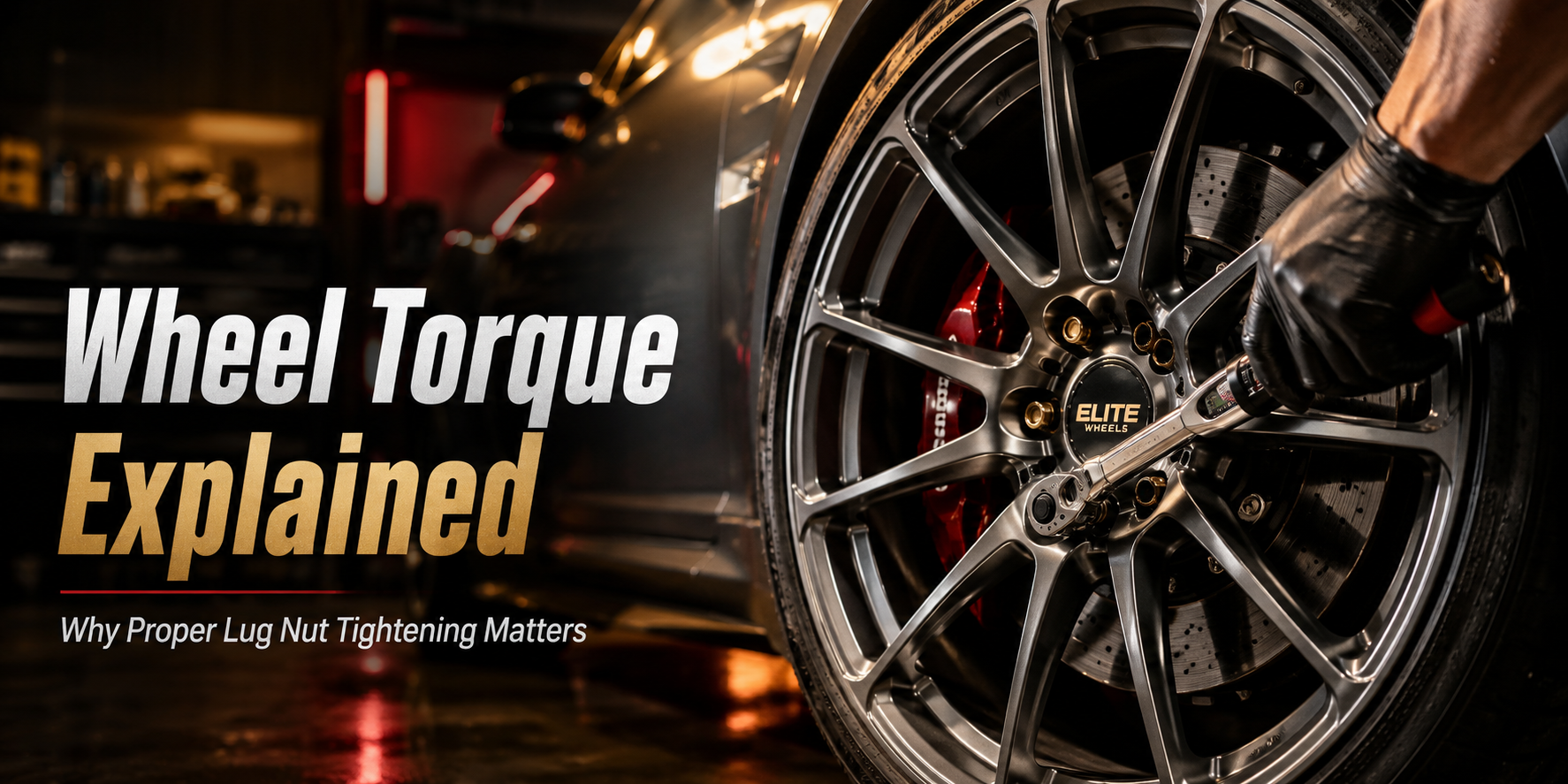
Aftermarket wheels can completely change the look of a vehicle, but the installation details matter just as much as the design of the wheel itself.
One of the most important details is wheel torque.
Wheel torque is the amount of tightening force applied to the lug nuts or lug bolts that secure the wheel to the vehicle. When torque is correct, the wheel is clamped evenly against the hub. When torque is wrong, it can lead to vibration, damaged studs, warped brake components, loose wheels, or unsafe driving conditions.
At Elite Wheels, we believe a proper wheel setup is about more than size, offset, and style. Safe installation matters. Whether you are installing wheels on a car, truck, SUV, lifted build, or performance vehicle, proper torque should never be skipped.
What Is Wheel Torque?
Wheel torque refers to the measured tightening force used when securing lug nuts or lug bolts. This force is usually measured in foot-pounds or Newton-meters, depending on the vehicle and region.
The goal is to create the correct clamping force between the wheel and the hub. That clamping force keeps the wheel seated properly while the vehicle is driving, braking, cornering, towing, or handling rough terrain.
Torque is not about simply making the lug nuts as tight as possible. It is about tightening them to the correct specification.
Why Proper Wheel Torque Matters
Proper wheel torque helps keep the wheel securely mounted to the vehicle. It also helps protect the wheel studs, lug nuts, brake rotors, hubs, and wheels.
If the lug nuts are under-tightened, the wheel may not stay fully seated against the hub. This can cause movement between the wheel and hub, which may lead to vibration, damaged studs, enlarged lug holes, or a wheel that loosens while driving.
If the lug nuts are over-tightened, that can also create problems. Too much torque can stretch the wheel studs, damage threads, warp brake rotors, or make the wheel difficult to remove later.
Both under-torque and over-torque can create problems. The safest option is to use the correct torque specification every time.
Do Not Rely Only on an Impact Gun
Impact guns are useful tools, but they should not be used as the final step for tightening wheels.
An impact gun can easily over-tighten lug nuts, especially if the tool is powerful or not properly controlled. It can also tighten unevenly from one lug to another.
For proper installation, an impact gun may be used to lightly snug the lug nuts, but the final tightening should be done with a calibrated torque wrench. A torque wrench allows the installer to tighten each lug nut to the correct specification.
That final step is what helps protect the wheel, hub, studs, and braking system.
Always Use the Vehicle’s Torque Specification
Every vehicle has a recommended wheel torque specification. This information is usually listed in the owner’s manual, service information, or manufacturer documentation.
Torque specs are not universal. A small car, performance sedan, heavy-duty truck, Jeep, SUV, and lifted truck may all require different torque values.
Wheel torque can depend on the vehicle, stud size, lug nut type, wheel material, and hardware design. Guessing is not a good idea.
Before installing wheels, always confirm the correct torque spec for the specific vehicle and hardware being used.
Aftermarket Wheels Still Need the Correct Torque
When installing aftermarket wheels, torque becomes even more important because the wheel design and hardware may be different from the factory setup.
Aftermarket wheels may require different lug nuts, different seat types, hub-centric rings, or different installation tools. Even if the wheels fit the vehicle, the hardware still needs to be correct.
The torque spec should be applied correctly using hardware that matches both the vehicle and the wheel. The wheel should also sit flush against the hub before final torque is applied.
The Star Pattern Matters
Lug nuts should be tightened in a star pattern or crisscross pattern. This helps the wheel seat evenly against the hub.
If one side of the wheel is tightened fully before the others, the wheel may not sit flat. Uneven tightening can create poor seating, vibration, or uneven clamping force.
A proper installation usually starts by hand-threading each lug nut, then snugging them in a star pattern, lowering the vehicle enough for the tire to touch the ground, and applying final torque in the correct pattern.
This step is simple, but it makes a big difference.
Hand-Thread the Lug Nuts First
Before using any tool, lug nuts should be started by hand. This helps confirm that the threads are lined up correctly.
If a lug nut does not thread smoothly by hand, do not force it. Cross-threading can damage the wheel stud and make the installation unsafe.
Hand-threading is especially important when working with aftermarket lug nuts, extended studs, spacers, or wheels with tight lug pockets.
Clean Mounting Surfaces Before Installation
Proper torque only works if the wheel is seated correctly. Dirt, rust, corrosion, paint buildup, or debris between the wheel and hub can prevent the wheel from sitting flat.
If the wheel does not sit flat against the hub, the torque reading may not reflect true clamping force. After driving, the debris can compress or shift, causing the wheel to loosen.
Before installing wheels, the hub surface and wheel mounting surface should be clean and free of debris.
Re-Torque After Driving
One of the most important steps after installing wheels is re-torquing.
After new wheels, tires, lug nuts, spacers, or adapters are installed, the torque should be checked again after a short driving period. Many installers recommend re-checking wheel torque after the first 50 to 100 miles.
This is important because the wheel and hardware can settle slightly after driving, heat cycles, braking, and vibration. A quick re-check helps confirm that the wheel is still properly seated and secure.
Skipping this step is one of the most common mistakes after installing aftermarket wheels.
Wheel Spacers and Adapters Need Extra Attention
Wheel spacers and adapters can be useful for certain fitment goals, but they add another layer of responsibility.
If spacers or adapters are used, the hardware must be properly torqued, properly seated, and re-checked. The spacer or adapter should match the vehicle, wheel, hub bore, and intended use.
Cheap or poorly fitted spacers can create vibration or unsafe clamping. If the setup uses bolt-on spacers, both the spacer-to-hub hardware and the wheel-to-spacer hardware may need to be torqued correctly.
Fitment parts should never be installed casually.
Truck and Off-Road Builds Need Regular Torque Checks
Trucks, Jeeps, SUVs, and off-road builds place extra stress on wheels and hardware. Larger tires, heavier wheels, towing, hauling, rough terrain, and suspension modifications all increase the importance of wheel checks.
If a truck or SUV sees off-road use, the wheel torque should be inspected more often. Trail impacts, vibration, mud, rocks, and heavy loads can all affect the wheel setup over time.
For lifted trucks and off-road vehicles, proper torque is not a one-time detail. It should be part of regular maintenance.
Performance Cars Need Precision
Performance cars also need careful torque procedures. High speeds, hard braking, sticky tires, cornering forces, and track use all put stress on wheel hardware.
For performance builds, proper wheel torque helps protect the studs, hubs, rotors, and wheels. It also supports smoother driving and better consistency.
If the vehicle sees track days or aggressive driving, torque should be checked before and after events.
Signs Wheel Torque Should Be Checked
Wheel torque should be checked any time there is a reason to question the wheel installation.
Common signs include vibration, clicking noises, steering shake, recent wheel installation, recent tire service, brake service, new lug nuts, new spacers, or a recent off-road trip.
If something feels wrong after a wheel installation, do not ignore it. The wheel setup should be inspected before continuing to drive.
Common Wheel Torque Mistakes
Many wheel problems come from simple installation mistakes that can be avoided.
- Using an impact gun for final tightening
- Not using a torque wrench
- Guessing the torque spec
- Tightening the lug nuts in the wrong pattern
- Skipping the re-torque after driving
- Installing wheels on dirty or rusty hubs
- Using the wrong lug nuts for the wheel
- Ignoring vibration after installation
These mistakes can damage parts and create safety issues. Proper torque is a simple step that prevents bigger problems.
Build the Wheel Setup the Right Way
Wheels are one of the most visible upgrades on a vehicle, but the safest builds are the ones installed correctly.
Proper wheel torque helps secure the wheel, protect the hardware, reduce vibration, and support safe driving. Whether the vehicle is a daily driver, lifted truck, performance car, SUV, or weekend build, torque should always be part of the installation process.
At Elite Wheels, we help drivers build complete wheel setups with the right fitment, hardware, tires, and installation details. A great wheel setup should look right, fit right, and be installed the right way.
Ready to upgrade your wheels? Explore aftermarket wheels, wheel hardware, and fitment options at Elite Wheels.